


Departures
The winter migrations began after ten.
The streams of commuters in Stockholm Central had calmed hours ago. Clad in hard shells and puffer jackets, a new species of travellers now appeared, dragging ski cases across the hall, their heels clicking over the creases in the station floor.
Eyes fixed on the wall displays, the flights moved towards the middle of the hall. Gathering beneath the vault, passengers observed the screens that would soon announce the platform from where the night train north would leave.
In their back, a row of paintings overlooked their movements through Centralen – depicting destinations they might reach by morning.
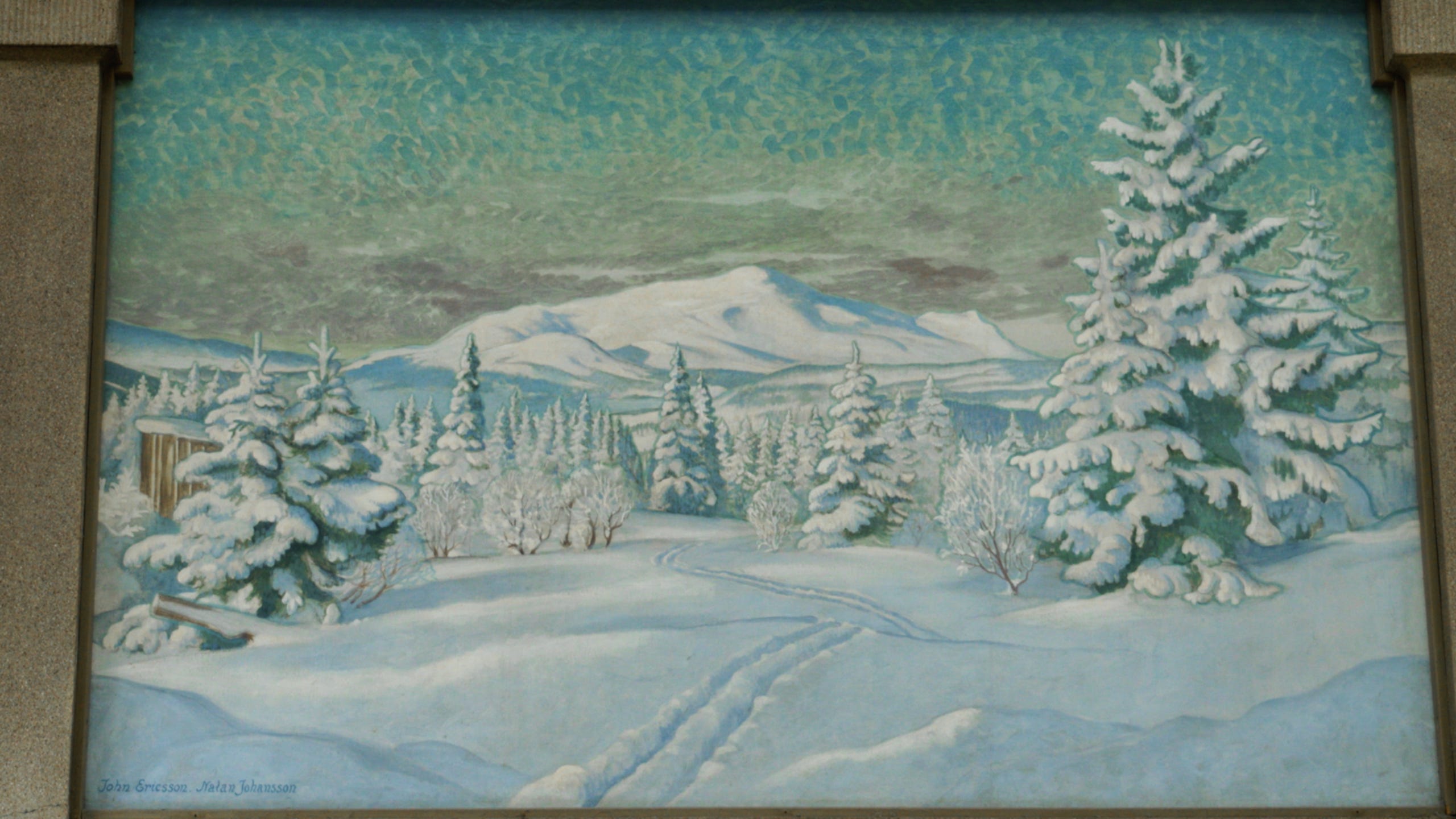
Centralen, 1927
As if projecting towards the back of their eyes, the cycle of paintings tells a story of how the image of the North is shaped – a vision that, returning in variations across decades, informs how it is perceived until today.
Eight niches on the eastern wall unfold an atlas of national imagination. Commissioning the paintings, the institutions behind them shaped a vision that not only depicted the North, but is part of its story of transformation.
On 17 June 1927, Stockholm Central re-opened after three years of reconstructions,. Light flooded through the windows of the central hall, resplendent like a temple of modern transport dreamed up in the classicist ideal. Two artists were commissioned to fill eight niches left in the white structure.
As stage painters in the theatre, John Ericsson and Natan Johansson had experience with monumental formats. Yet when the shops, snack bars, and kiosks in Centralen first opened that summer, the walls above shone in white.
The painters had run late.
Editing the North
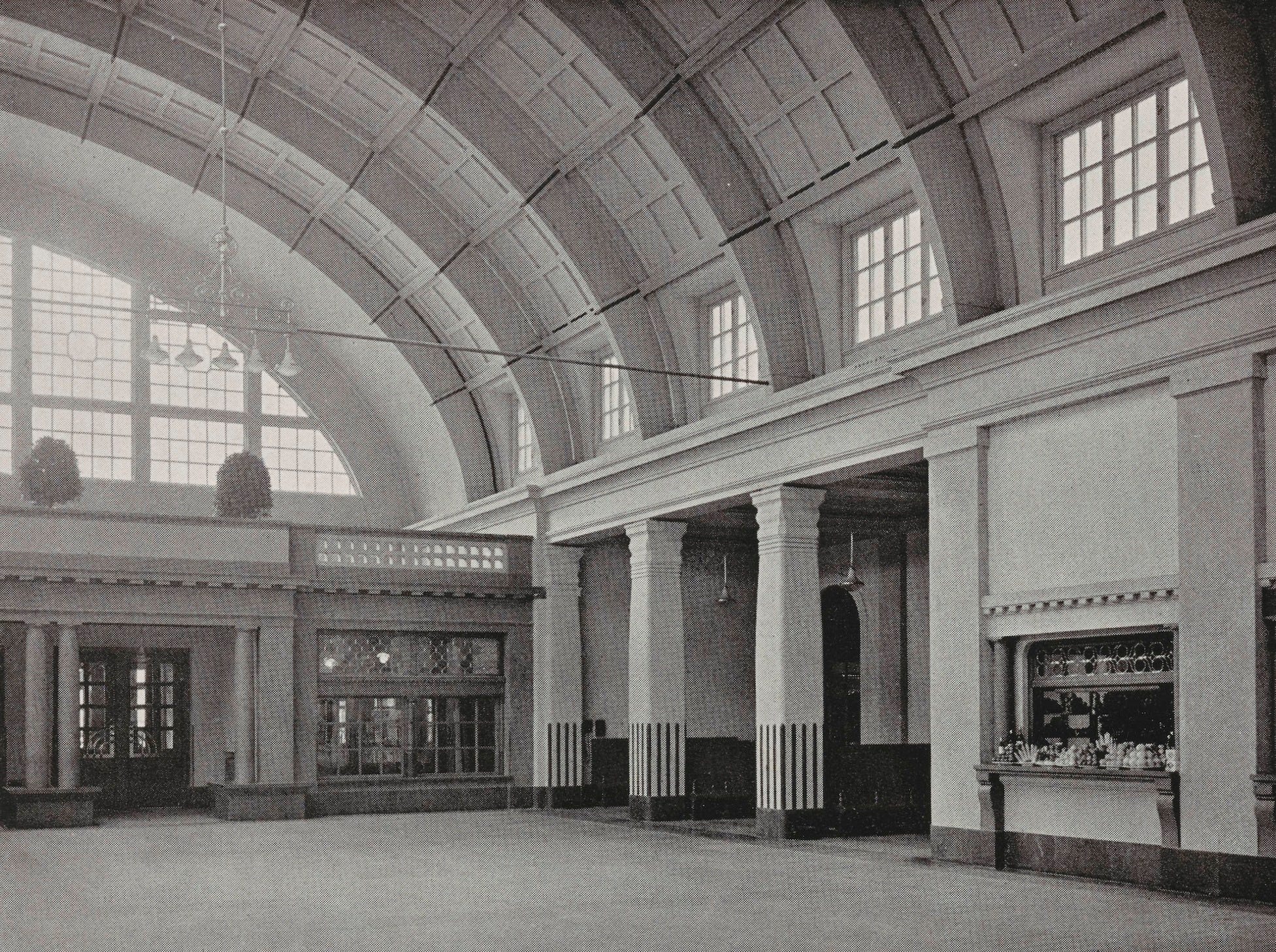
Only half a year later, on 14 December 1927, the artworks were installed: eight distemper paintings on canvas, each signed by both artists, first varnished and then glued right on plaster – four to the left of the main entrance and four to the right.1
In 1927, the eight paintings commissioned for Centralen unfolded a variety of culture and landscapes that the country had to offer – and that all lay conveniently in reach from Sweden’s central railway hub.2
The ones in northern direction (left) depict scenes from Norrland. Promoting the landscapes of Sweden and creating access were key missions of the Swedish Tourist Association (STF). For this purpose, the association closely collaborated with the Swedish National Railway.
The motifs these institutions chose for Centralen revolved around fortresses, churches, and untouched landscapes, following the aesthetics of National Romanticism. Instead of working from sketches produced on site, the artists took photographs as their point of departure.
The photographs had appeared in the STF’s journal before: in this medium, the association annually published a collection of articles on destinations across the country, preceded by a number of plates with photographs.3
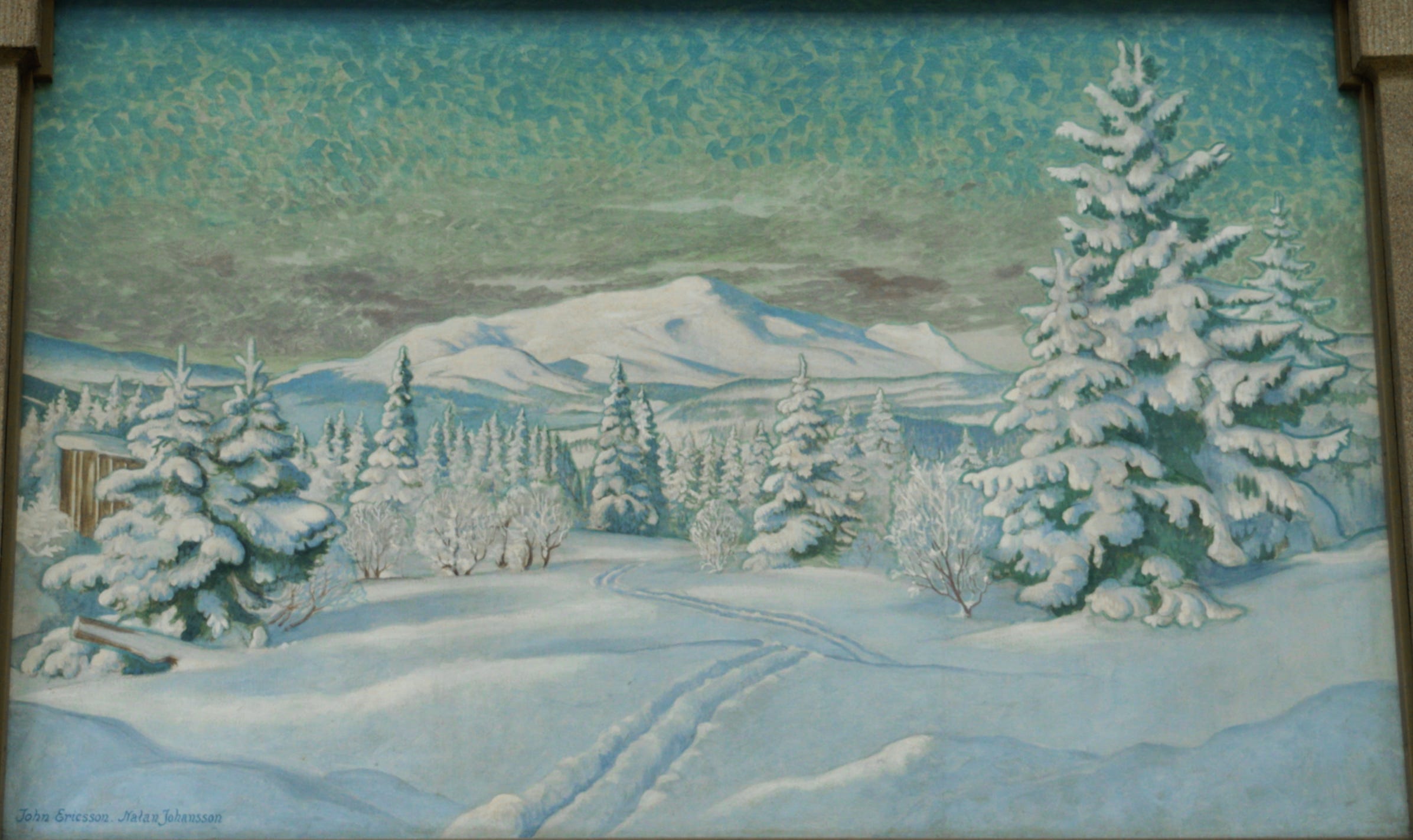
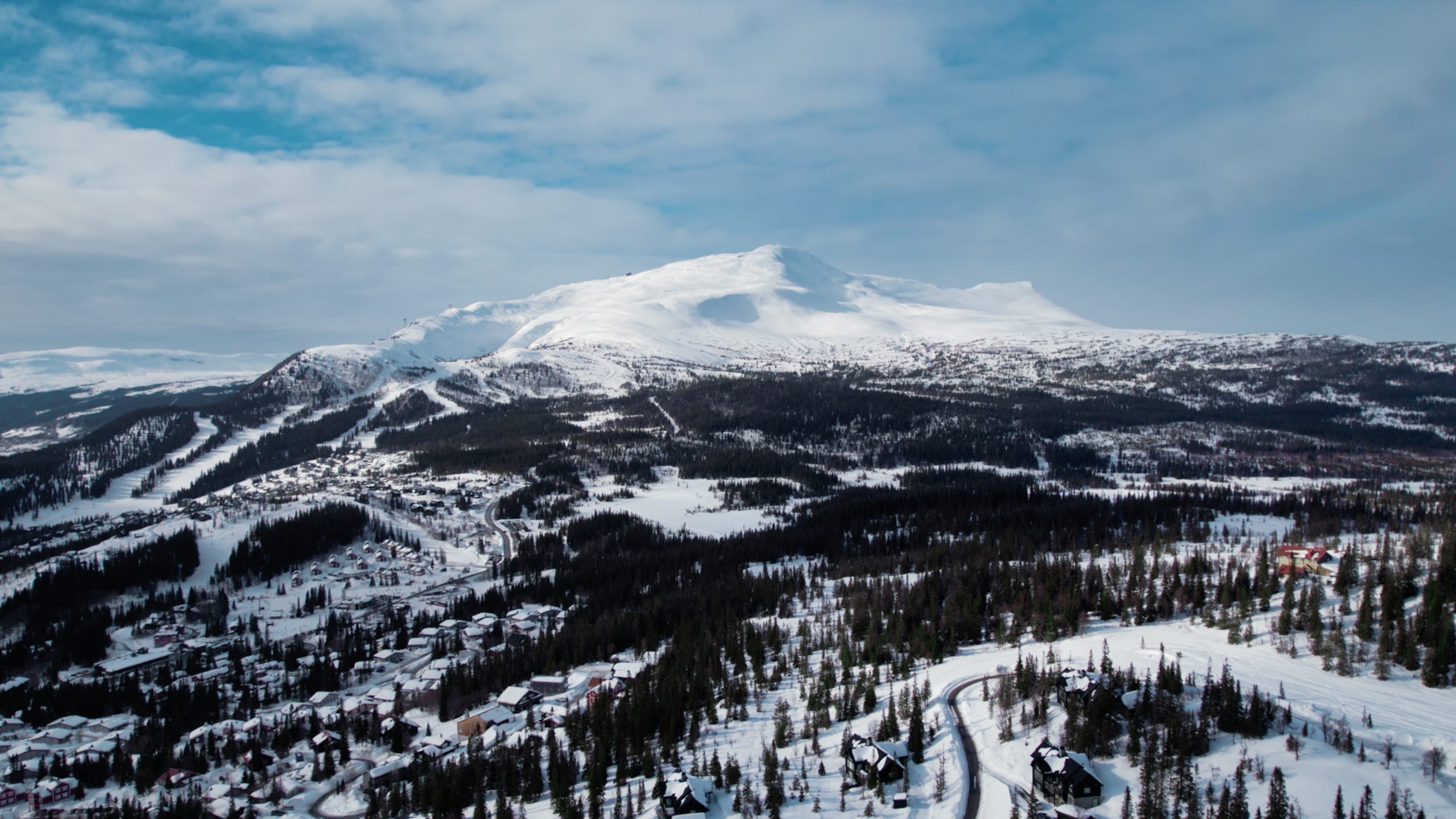
In the 1920s, Ericsson and Johansson translated eight of them into vistas from the North. They include a view over the Vedasjöarna lakes at Nordingrå, a view over Stora Sjöfället in Lapland, and a winter view of snowy Åreskutan (1420m), whose foot the night train would reach the next morning.
What happened between photograph and painting was not a direct translation into a different medium, but rather the deliberate shaping of an artistic vision.
The photograph underlying the view of Åreskutan shows a winter landscape in the foreground as seen from Brattland, including details such as fences, a snow-covered roof, and a well-travelled road, on which a horse-drawn sled moves towards the viewer.
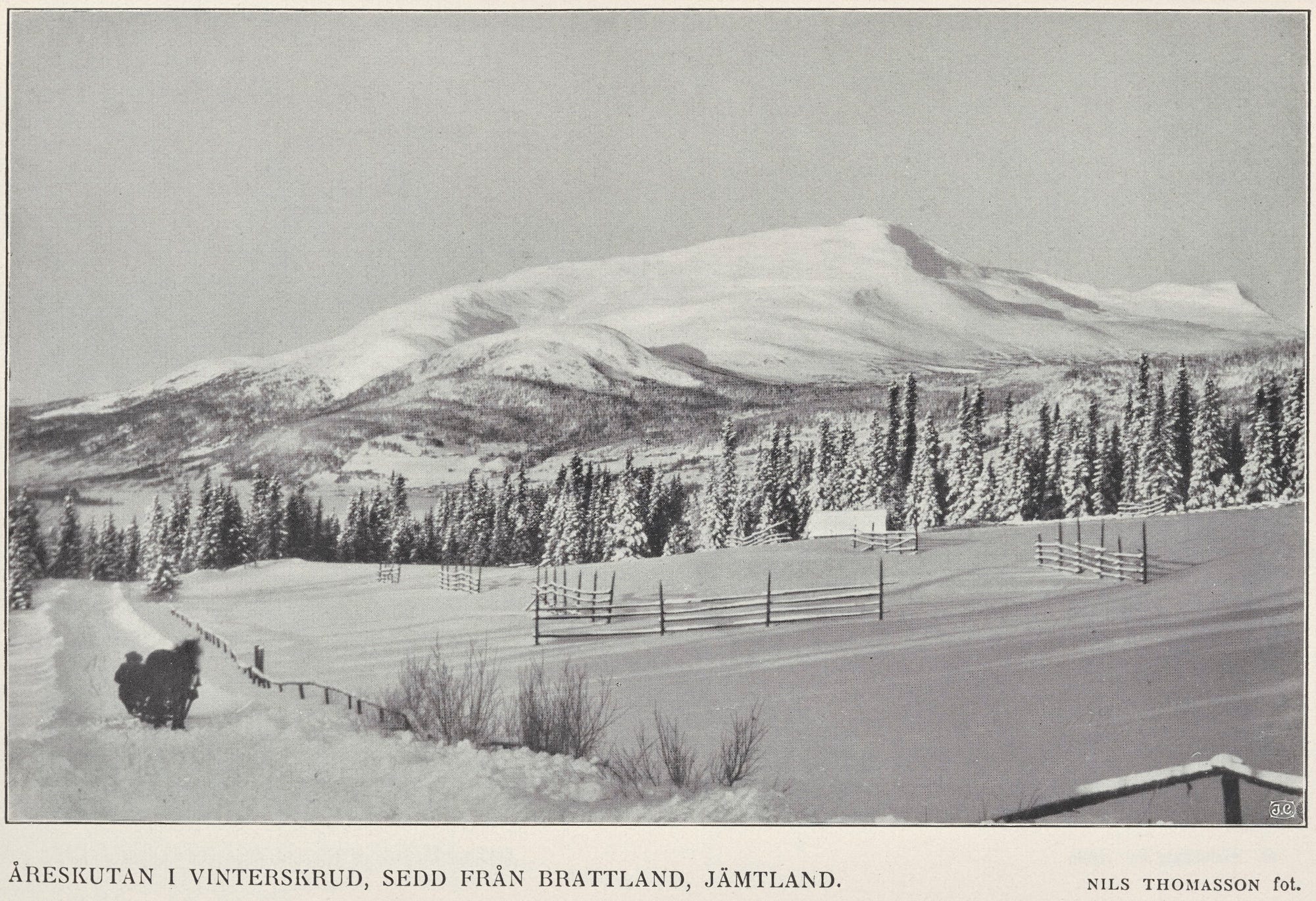
The painting moves the mountain further to the back, giving more space to the landscape in its foreground instead. Ericsson and Johansson enhanced the natural features as seen in the original photograph – the trees, the snow blanket – and eclipsed most signs of human presence and the road itself that facilitated access in the first place.
What the artists created that way was winter landscape suggesting to embrace the traveller in silence and solitude. Yet this projection that travellers followed north had been edited already before they arrived.
Erasing Access
This stylising of landscape and concealing of traces of human infrastructure was systematic rather than incidental.
In their display of Åreskutan, Johansson and Ericsson pushed the margins of accessibility. Their paintings promised explorations on skis in landscapes as untouched as the snow blanket above.
This spin the artists added to their rendering of the STF photographs was programmatic. The northernmost among them was a picture by the photographer Borg Mesch. Published in the 1920 issue of the STF journal, it shows Saltoluokta at the lake of Stora Sjöfallet.
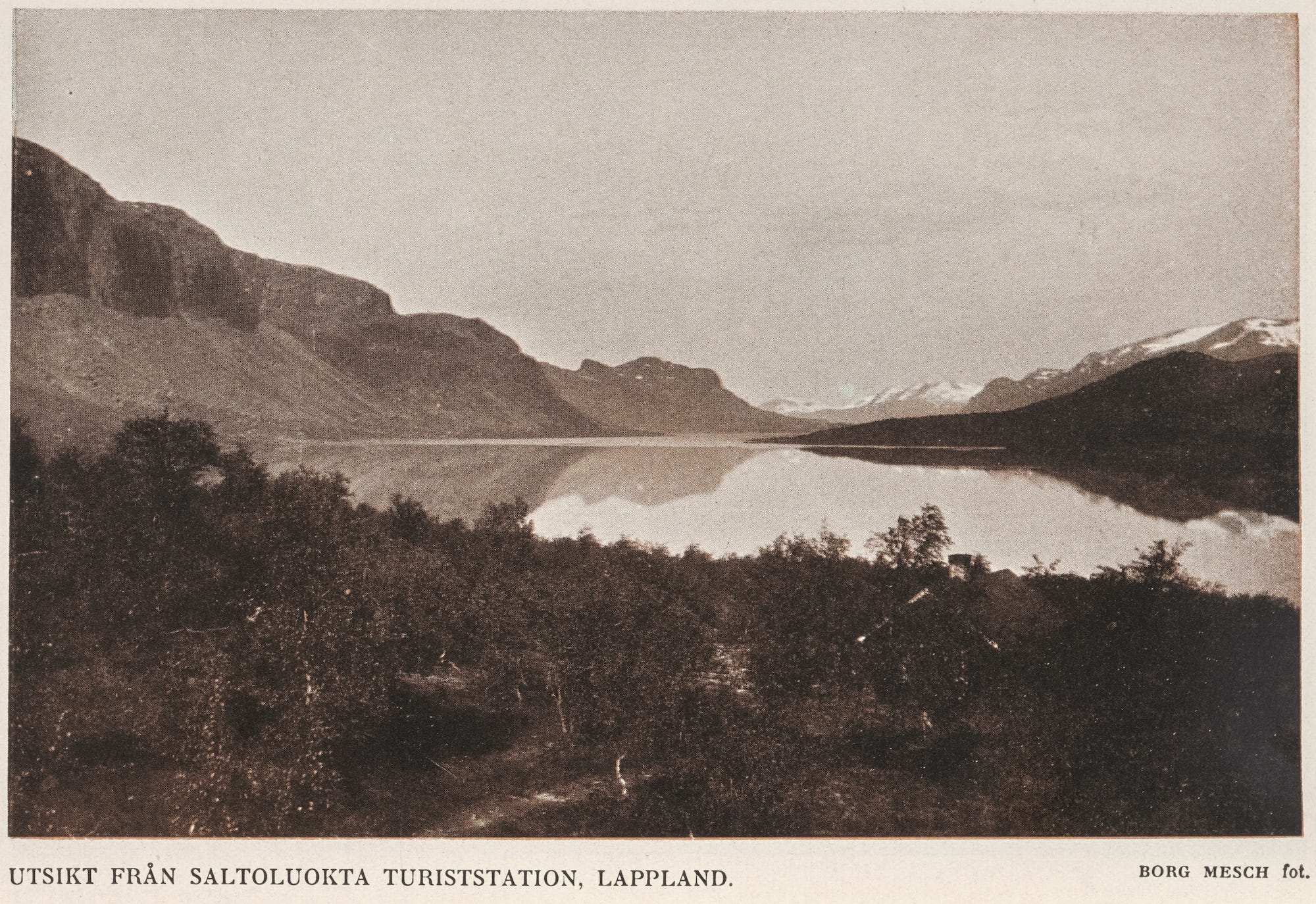
By the time the photograph appeared, STF had been operating a tourist cabin at Saltoluokta for a few decades. An article printed in the same volume describes the surrounding landscape – including the waterfall that, at the time, was celebrated as the ‘Niagara of the North’.
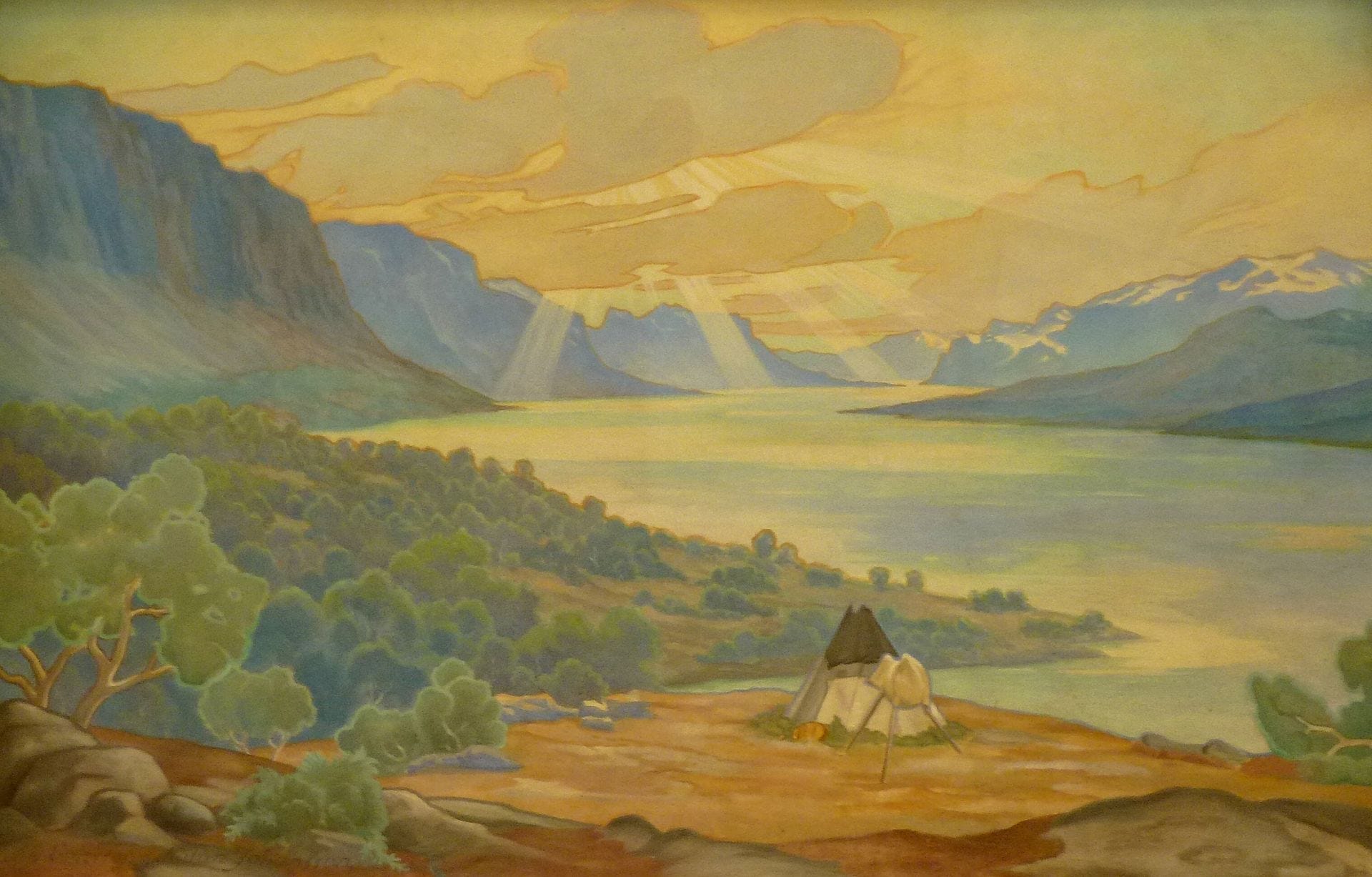
Access precedes the illusion of a landscape untouched by modern infrastructure that Johansson and Ericsson created from Mesch’s picture.
As the caption suggests, he took his photograph from the cabin (a building can be seen behind the leaves in the foreground). For their work, the artists removed all buildings and painted a clearing instead. On its expanse, a single kåta stands pitched, suggesting the lakeside as seasonal gathering place of the Sámi.
From Vision to Resource
What was removed from the paintings did not remain absent from the landscape.
The finished work depicts Stora Sjöfallet as a place unaffected by the transforming forces of the Swedish nation. In 1927, such a presentation was already a construct – politically, environmentally, and legally.
With the railway, the infrastructure came to Sápmi that allowed its touristic and material exploitation. In 1909, the wider area around the nearby waterfall had been included among the national parks that Sweden declared as the first in Europe.
By the time the paintings were placed in Centralen in 1927, the sight that had made Saltoluokta famous was already starving.
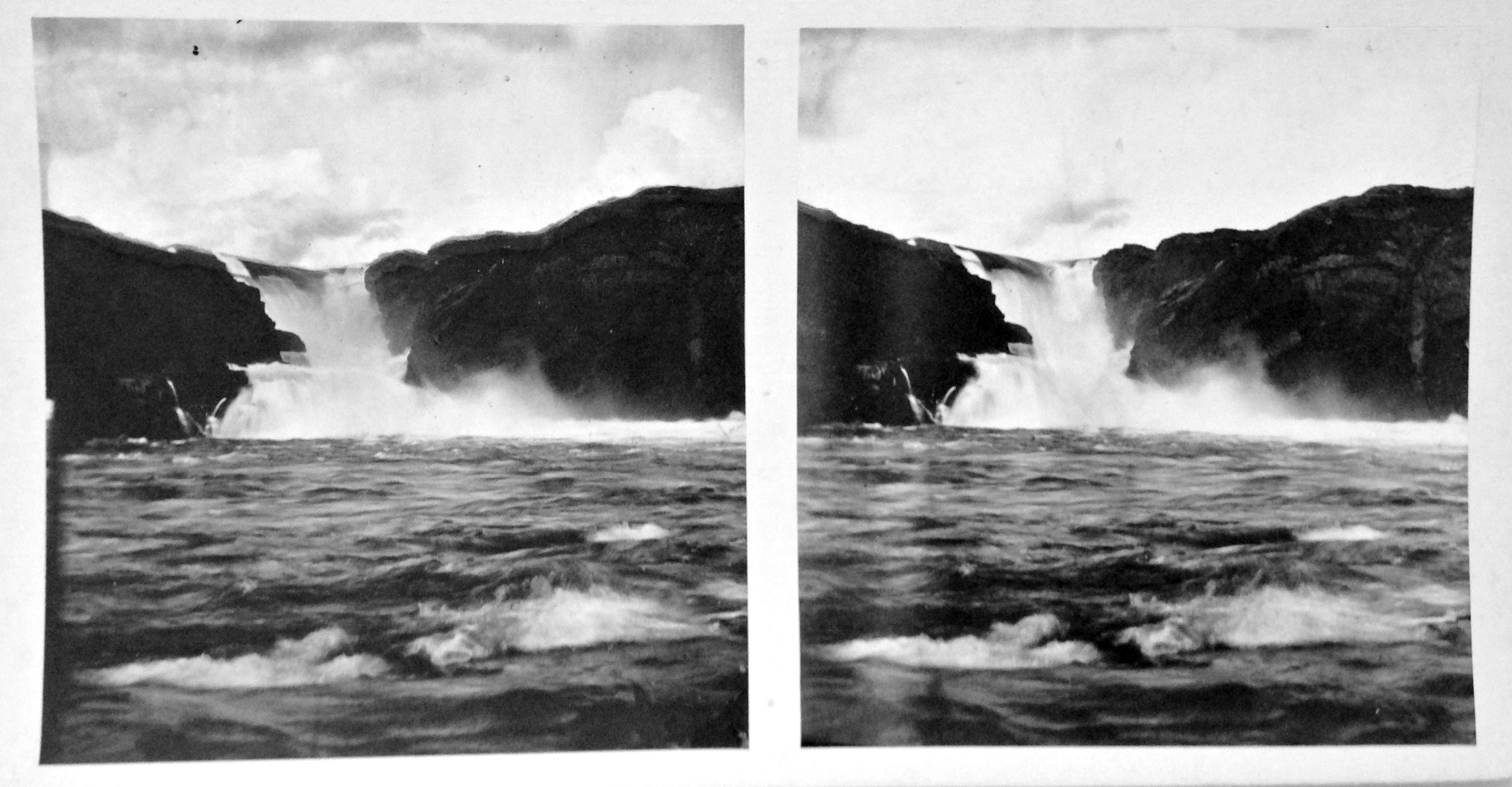
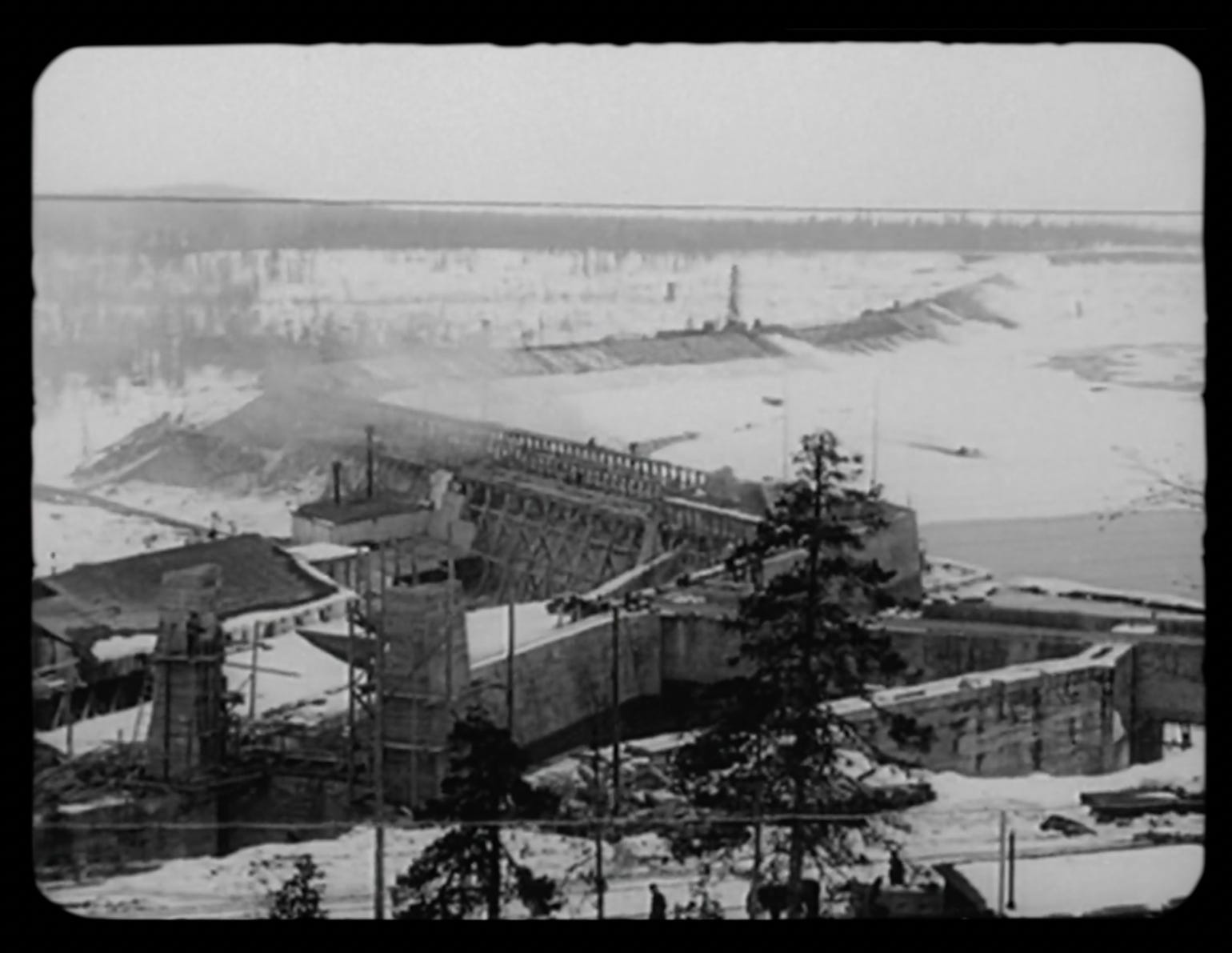
Only a decade after the first national parks were declared, Swedish administration created a first exception from the rule. The government decided to sacrifice Stora Sjöfallet for the first in a series of hydropower projects along the Lule River; redrawing the borders of sanctuaries in lines with industrial interests.
The impact on Sámi culture and communities was immense. Water levels rose, fragmenting reindeer herding routes that had been used over centuries. Ice on the lake formed in less predictable patterns in winter. Sacred sites and traditional paths of the Sámi disappeared under rivers that became regulated bodies of water.
Over decades, the roar of a waterfall that was once defined, depicted, and protected as a landscape of national significance faded as the Lule River was turned into an artery of energy supply.
What happened here became the model for further hydropower projects all across Norrland. Justified by narratives of national interest, the electricity they created powered railways and mining operations across the north.
With the railways, the tourists followed.4
The Image Behind
The year the paintings were placed in Stockholm Central, the landscapes they depicted were already echoes of a disappearing world.
Did it ever exist at all?
The artworks were first and foremost instruments of longing – shaping a vision of pristine landscapes that seemed to lie just within reach, a night train’s journey away.
At Åre, traces of human presence once erased from the paintings are now inscribed on the mountain itself. Half a century after Ericsson and Johansson completed their work, lifts and ski pistes began to carve their paths into the slopes and forests of Åreskutan.
At Stockholm Central, a commotion spread through the waiting crowd. The platform number had appeared.
Leaving the station hall behind, the travellers embarked for their destination north – its image still pressing against their backs.
Further reading and references
My presentation of the paintings and their history follows the study by Birgitta Jansson, Stockholms Centralstations åtta monumentalmålningar över svenska landskap av John Ericsson och Natan Johansson, Stockholm 1997 (Konstvetenskapliga institutionen vid Stockholms universitet).
According to this study, details about their commissioning remain opaque. There is no trace of competition or planning debates. The paintings were installed with little echo.
All eight paintings can be found on the Swedish site of the Central Station on Wikipedia.
On the reconstruction of the Central Station see Stockholms centralstation. Dess historiska utveckling och ombyggnad under åren 1925–1927, Stockholm 1927 (with rich architectural foldouts).
At the time Centralen re-opened, artists and architects had explored ways for almost a century to to express the cultural achievements and national programmes associated with the railway.
Initially, the use of of art in stations had not been uncontroversial. Writers such as the Romanticist John Ruskin in his Seven Lamps of Architecture (1849) considered the mission of kindling public taste exclusive to museums. Others embraced stations as places to shape a democratic and national spirit, advocating the use of art as means of public education.
Many industrialising countries commissioned main stations fashioned as temples of progress, populated by allegories beyond the ancient canon: electricity, trade, the power of steam, or the accumulation of capital, as W.G. Sebald described in his novel Austerlitz for Antwerp station (see W.G. Sebald, Austerlitz, Frankfurt am Main 2003, pp. 20f.). In other stations, monumental paintings or mosaics celebrated cities and landscapes that now lay in reach from a central hub, connected by a network of national railways.
See Monika Wagner, Allegorie und Geschichte. Ausstattungsprogramme öffentlicher Gebäude des 19. Jahrhunderts in Deutschland, Tübingen 1999, pp. 165–95 (with example from the destroyed stations of Königsberg, Munich, Karlsruhe). Landscape paintings were, for example, foreseen for the Gare de Lyon at Paris, Helsinki Central, or Euston Station at London (not executed). For Swedish stations see Jansson, Stockholms Centralstations åtta monumentalmålningar, 4–7.
These have been identified by Jansson, Stockholms Centralstations åtta monumentalmålningar, pp. 21ff.
For the photographs as published in the STF Journal see Svenska Turistföreningens årsskrift 1920, pl. 6 (Mesch), and 1915, pl. 19 (Wångström).
For the bigger picture see Sverker Sörlin, Framtidslandet, revised edition, Luleå 2023.