


Cold Embers
In the last light we entered the woods, filigree stems rising to a uniform height.
Lars and I had passed the forest on our return from scouting at Laforsen Dam. The geometric pattern still hinted at the clearcut that preceded this stand: stems standing out against the twilight of the midsummer sky, their bark scarred by the flames that had swept through the plantation.
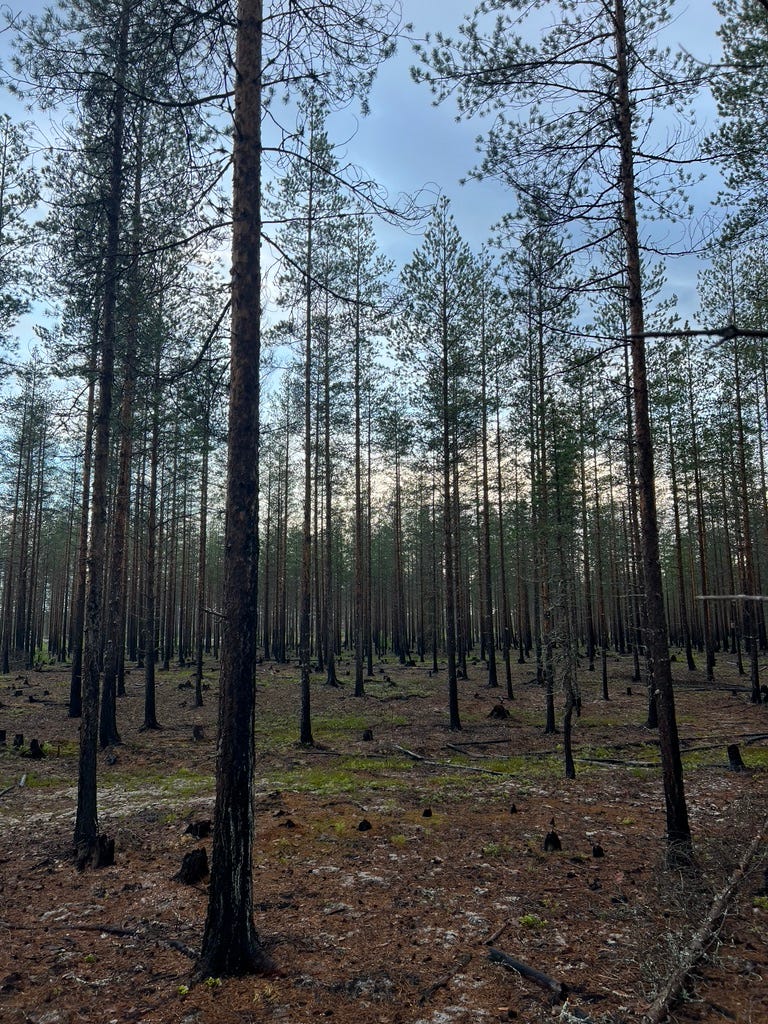
The view into the scorched forest recalled the hills we had passed on the way south.
On 14 July 2018, a lightning strike ignited one of the largest fires in Sweden’s history. The woods around Laforsen Dam marked the southeastern tip of a blaze that swept across the entire Ljusnan Valley.
The summer had been one of the driest on record.1 Lars told me in the car that his Fire and Rescue squad had been called in from as far as Jämtland. As summers grow hotter, fires like these have become more frequent in the North.
The charred forests were before my eyes again, carbonised trees spiking up like pitfall traps. Through the twilight in the Laforsen forest, traces of the same blaze still shimmered; scorched stems that seemed to conjure the smell of cold ashes.
Stumps reached from the ground like merlons of a burnt-down citadel, steel cables still winding around some of them, their cores spliced into rusted ends as if the siege had been abandoned.
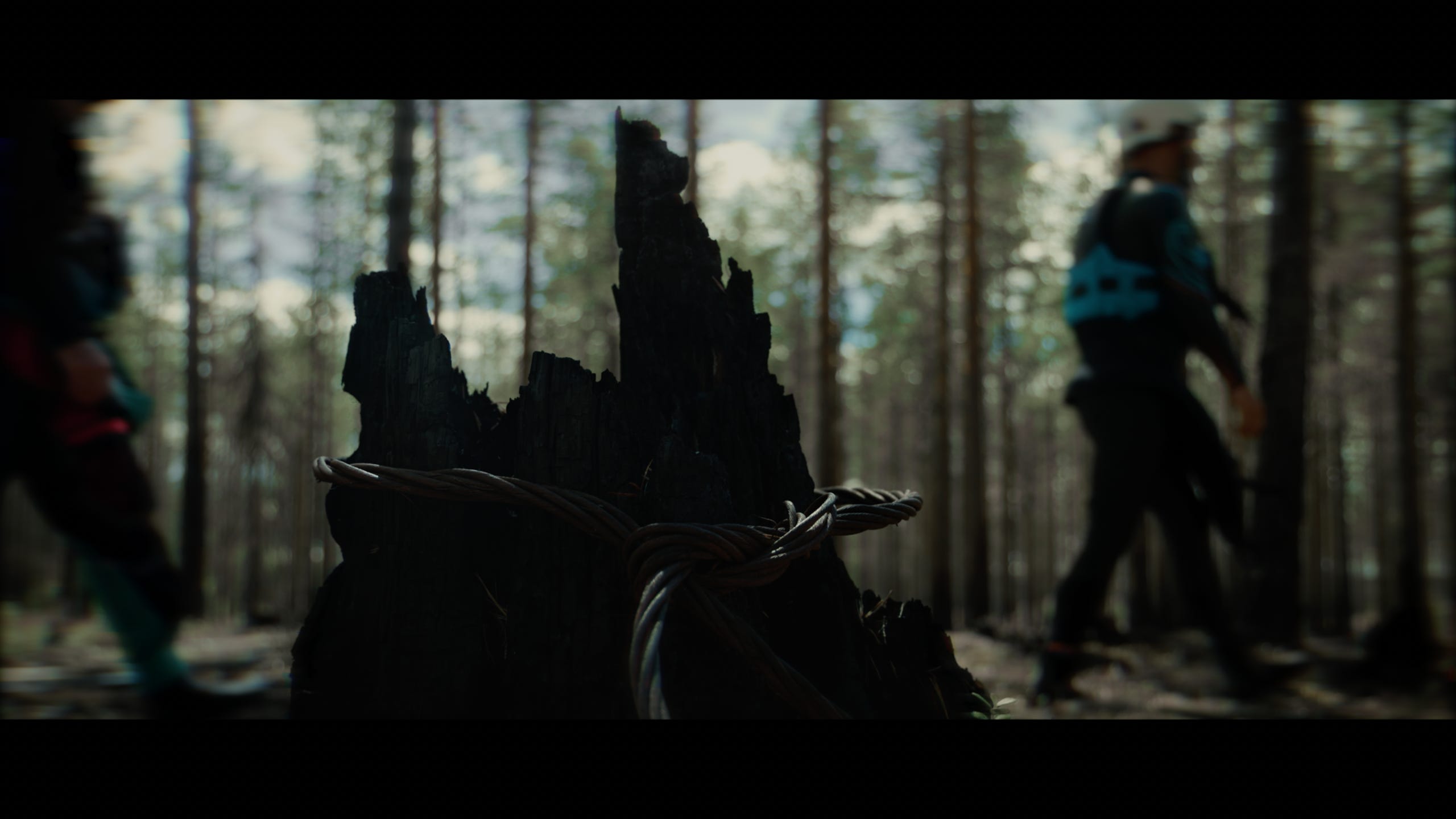
It was a landscape that reached deeper, towards terrains the poet Vergil laid out in his Aeneid. At the threshold to the Otherworld, the Sibyl sends Aeneas out into the expanse of a gloomy forest, on a quest to find the Golden Bough – the elusive device that grants access to Elysium.
The visuals we later came to film in this forest still take me back to the time we first scouted it, in the blue hour.
White lichen shimmering on forest ground like piebald nests.
Burnt pine stems that opened into a clearing in the midsummer sky.
Magenta blossoms swaying in the evening breeze.
Blackened Pear Wood
Winter closed in during the months after summer work on Ljusnan. At Uppsala, the muffled sound of snow ploughs scraping asphalt pressed through the triple-glazed windows at the Museum of Evolution.
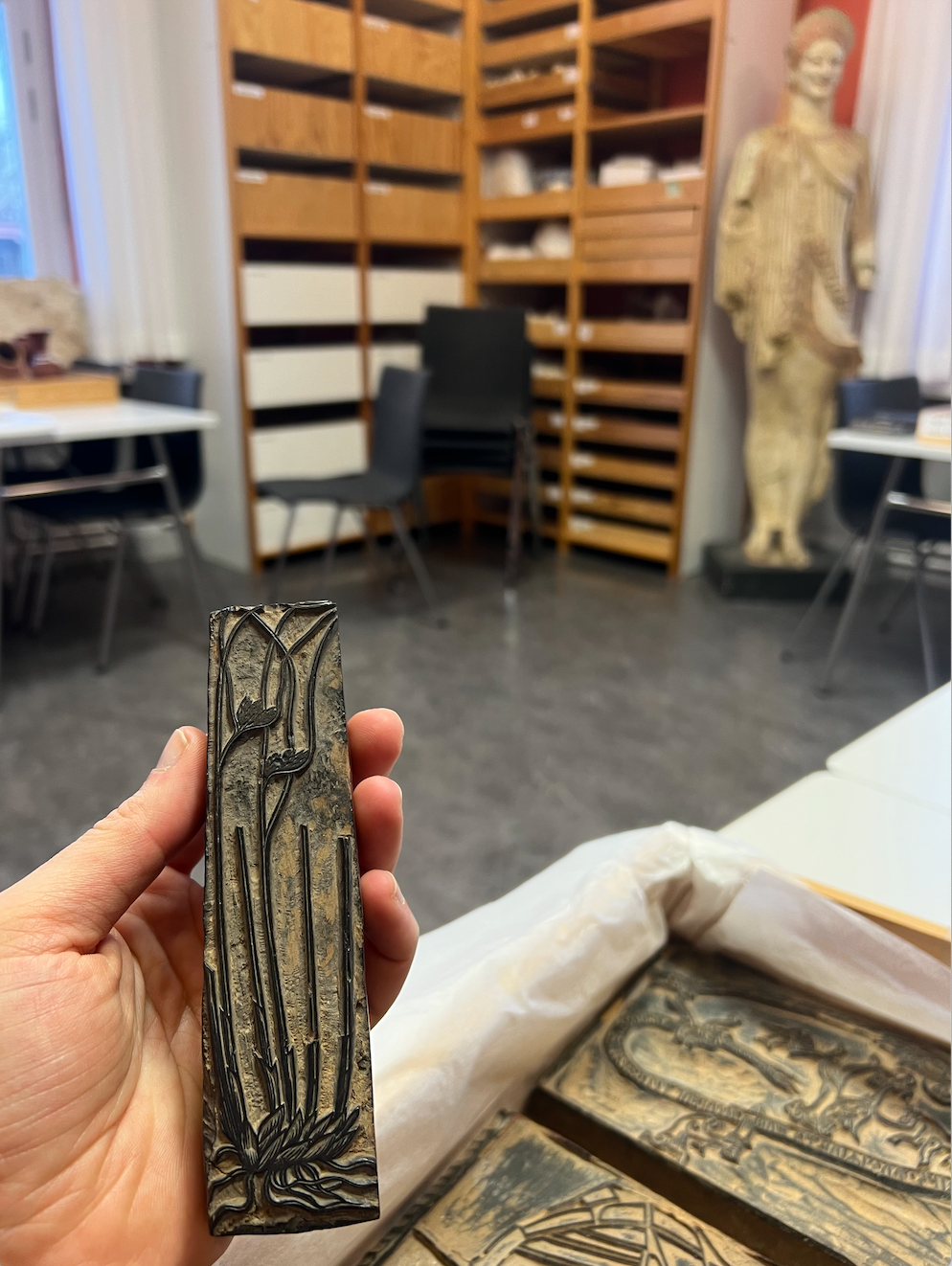
On my desk stood a shallow box.
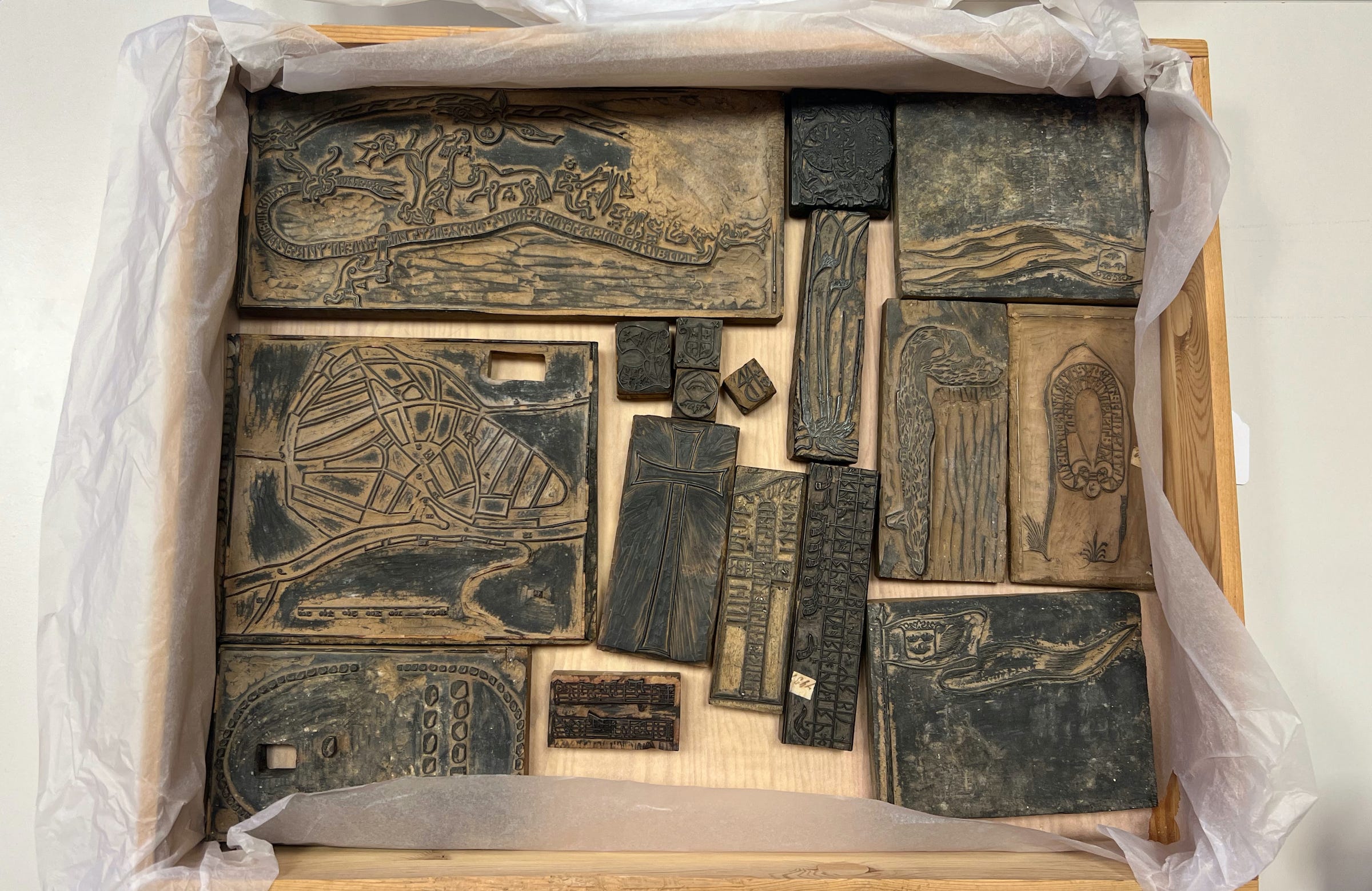
During renovations at the Gustavianum, the museum’s holdings had been moved here. Lined with translucent paper, the box contained print blocks carved from pear wood more than three centuries ago.
Their blackened surfaces recalled soot and chat. The colour, however, stemmed from repeated print runs – rune stones, historic maps of Uppsala, ancient calendars, historical sites, archaeological finds pressed onto paper.
One block, however, showed a different subject.
Raised lines depicted grass stalks rising from a single root. The woodblock felt dense in my hands, its outer edges unevenly cut. I raised it to my nose.
It didn’t smell of smoke.
Elysian Outlook
Most of the blocks were familiar to me. They stemmed from Olof Rudbeck’s Atlantica. Its illustrations we published in our visual database, Reaching for Atlantis.
Yet the one in my hand came from a different project.
The inconspicuous grass was one of many thousands of illustrations Olof Rudbeck prepared. Together with his family, he pursued the goal of publishing a botanical atlas depicting every plant known to humankind.
Such a work promised unrivalled visual power and tremendous aid to botanists across the globe. In the 17th century, they often had to rely on written descriptions and convoluted Latin names to identify specimens.
At the same time, such a work was meant to unfold the abundance of God’s creation. By naming the atlas Campus Elysii – the ‘Elysian Fields’ – Rudbeck drew on a mythical register.2 The title evoked the abundant flora of the riverbanks where the ancients imagined the souls of the blessed to dwell – promised lands that his Atlantica had traced to Sweden’s rivers.

Once completed, Rudbeck envisioned the Campus Elysii as a work of twelve volumes. Each was to present material according to systematics devised by the Swiss botanist Caspar Bauhin in the 17th century.
For years, an ever-growing team of artists carved thousands of illustrations into pear wood blocks. As models, they drew on live specimens from botanical gardens and from travelling scholars, as well as from printed and drawn sources.
Patrons and the Swedish King himself carried the prohibitive costs of Rudbeck’s Elysian project. In 1701, its first volume appeared.
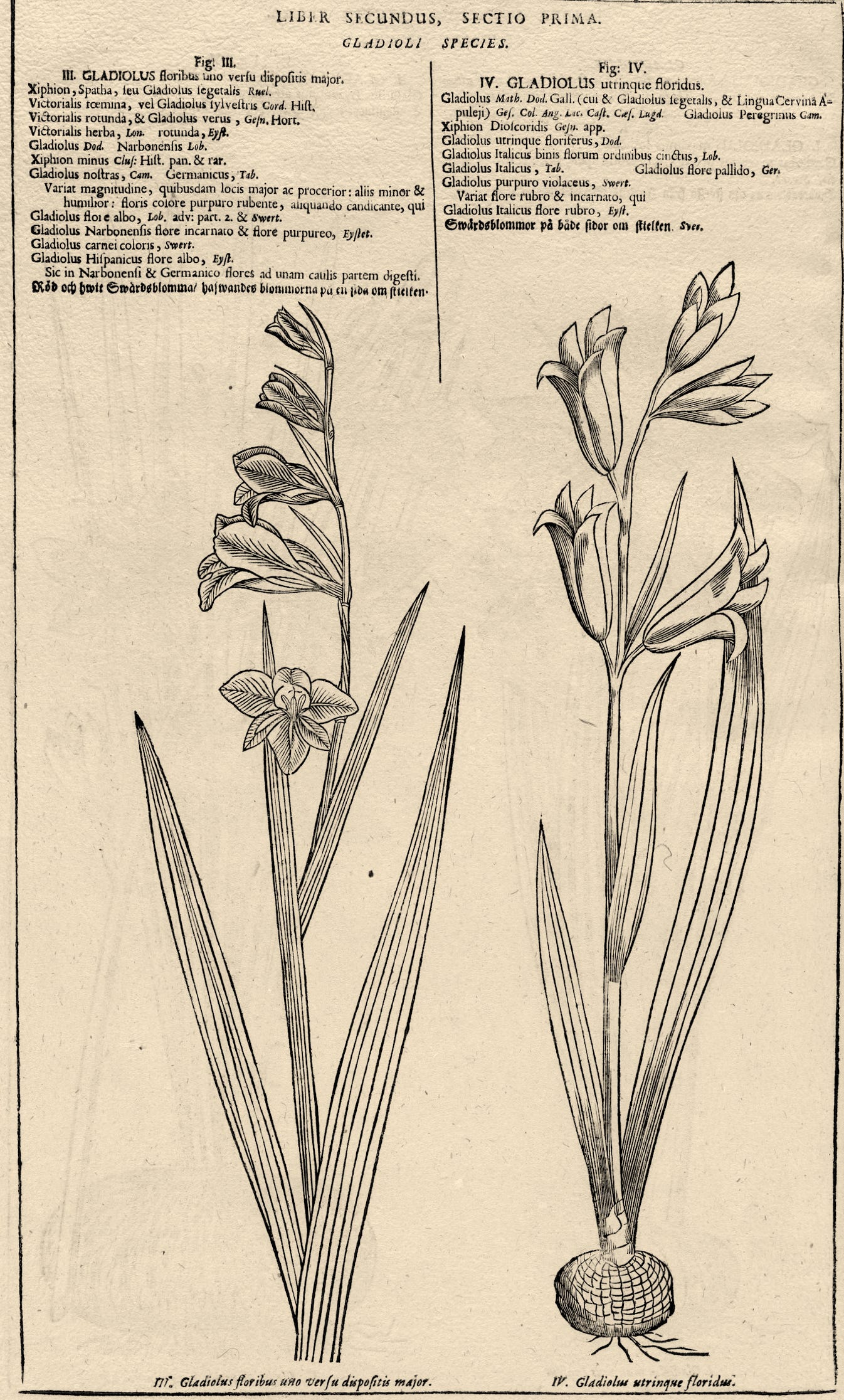
For the premiere of the Campus Elysii, however, Rudbeck had altered the order. The first volume printed did not contain grasses (no. I), but category no. II: bulbous plants – irises, hyacinths, orchids, and lilies.
The reason for the swap was commercial.
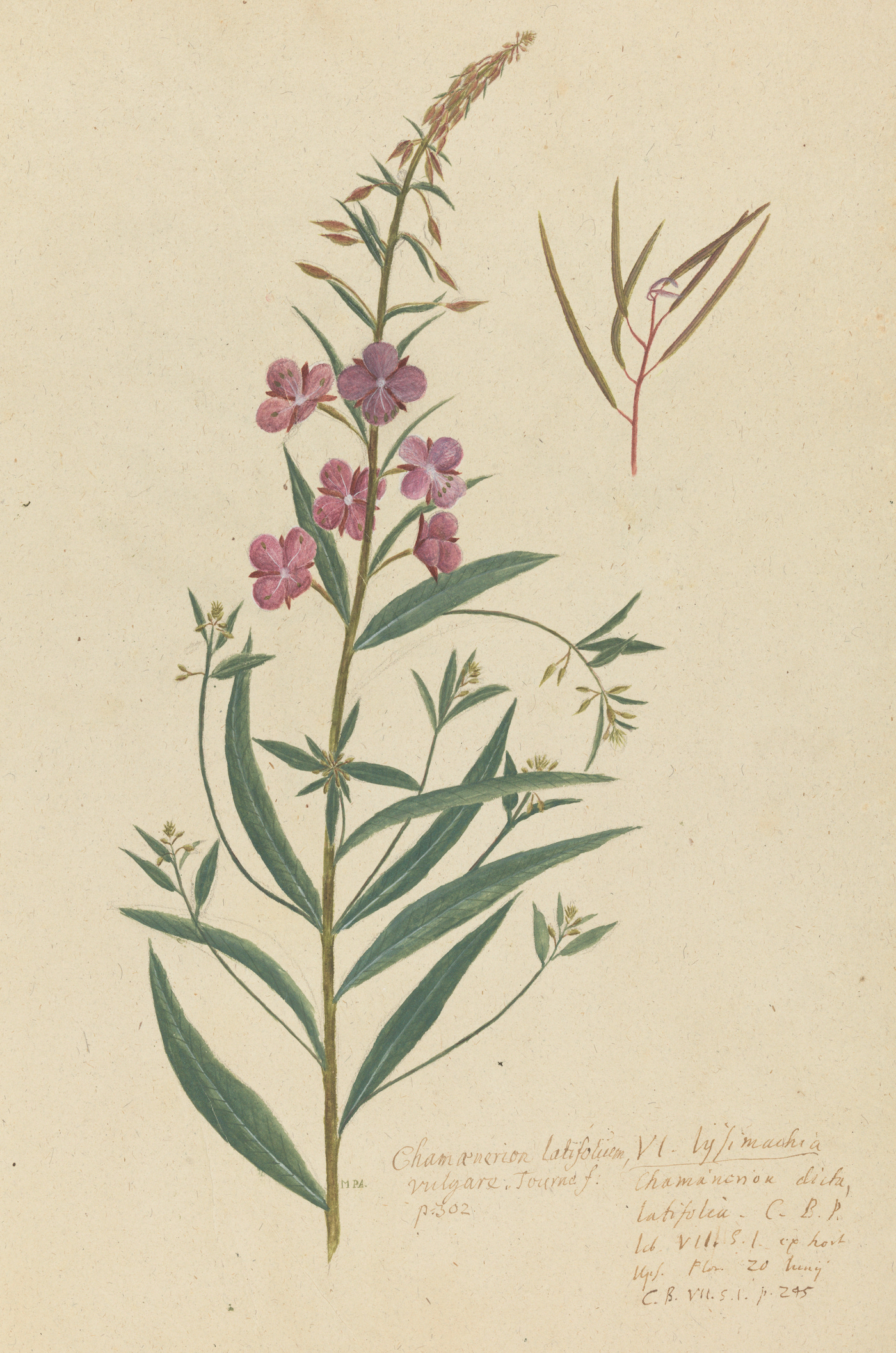
As Rudbeck argued in the preface, the visual beauty of bulbous plants made them ideal for promoting a service he offered to bibliophiles: for an additional fee, buyers could have each print coloured by hand, to match a master manuscript prepared by his artists.3 Over the years, a team that included his son and daughters filled several volumes with more than 6,000 hand-coloured paintings, based on live specimens as well as printed sources.4
Pieces of Paradise
In spring 1702, the second volume of the Campus Elysii lay under the press – this time covering grasses, category no. I in Bauhin’s order.
During these days the Great Fire struck Uppsala.
On 16 May 1702, the city burned to the ground. The flames that raged across the city destroyed the Rudbecks’ home, their collections of plants and books. According to the legend, Rudbeck the Elder shouted instructions from the roof of the Gustavianum to coordinate the firemen.
His efforts were in vain.

The fire consumed the forthcoming volumes of his Atlantica and the Campus Elysii: notes, printed sheets, woodblocks. What survived the blaze was little.
Most of the hand-coloured master manuscript.
A number of sheets of the fourth volume of the Atlantica, and some three or four copies of the second volume of the Campus Elysii, still printed before the fire.
A few dozen of woodblocks that the artists had carved in thousands for its volumes.
The one in the box was the only one I know of that survives at Uppsala.5
Withered Visions
Yet once there had been more.
In the 18th century, some 150 of the Campus Elysii woodblocks passed into the hands of Carl Linnaeus – the young botanist mentored by Rudbeck the Younger during his studies in Uppsala.
Over the course of his career, Linnaeus revolutionised the system of categorising and naming plants. When Sweden’s most famous botanist passed away in 1778, the law forced his widow to leave the house – and everything in it – to the son.
When Carl the Younger skimmed every nook and cranny for valuables, he came across a pile of carved woodblocks, heaped together in the corner of a cabinet.
The woodblocks – 130 in number – turned out to stem from Olof Rudbeck’s projects. Previously, they had been thought to have perished in the Great Fire.
According to Edward Smith, writing in 1789, Linnaeus’s son made an initial effort to have them printed. However, the project soon petered out.
Some 90 woodblocks were left when Smith acquired the collection of Linnaeus in 1784. Many of these were in deplorable condition, he writes. Of the remainder missing from the original 130, he speculated Linnaeus the Younger may have used them to kindle the stove. Today, what Smith was still able to acquire is kept at the Linnean Society in London, which he founded in 1788.6
One year later, Smith concluded the printing project Carl junior had failed to deliver. Under the title Reliquiae Rudbeckianae (‘Rudbeckian Remains’), he printed what he had been able to save, alongside updated references to botanical literature.7
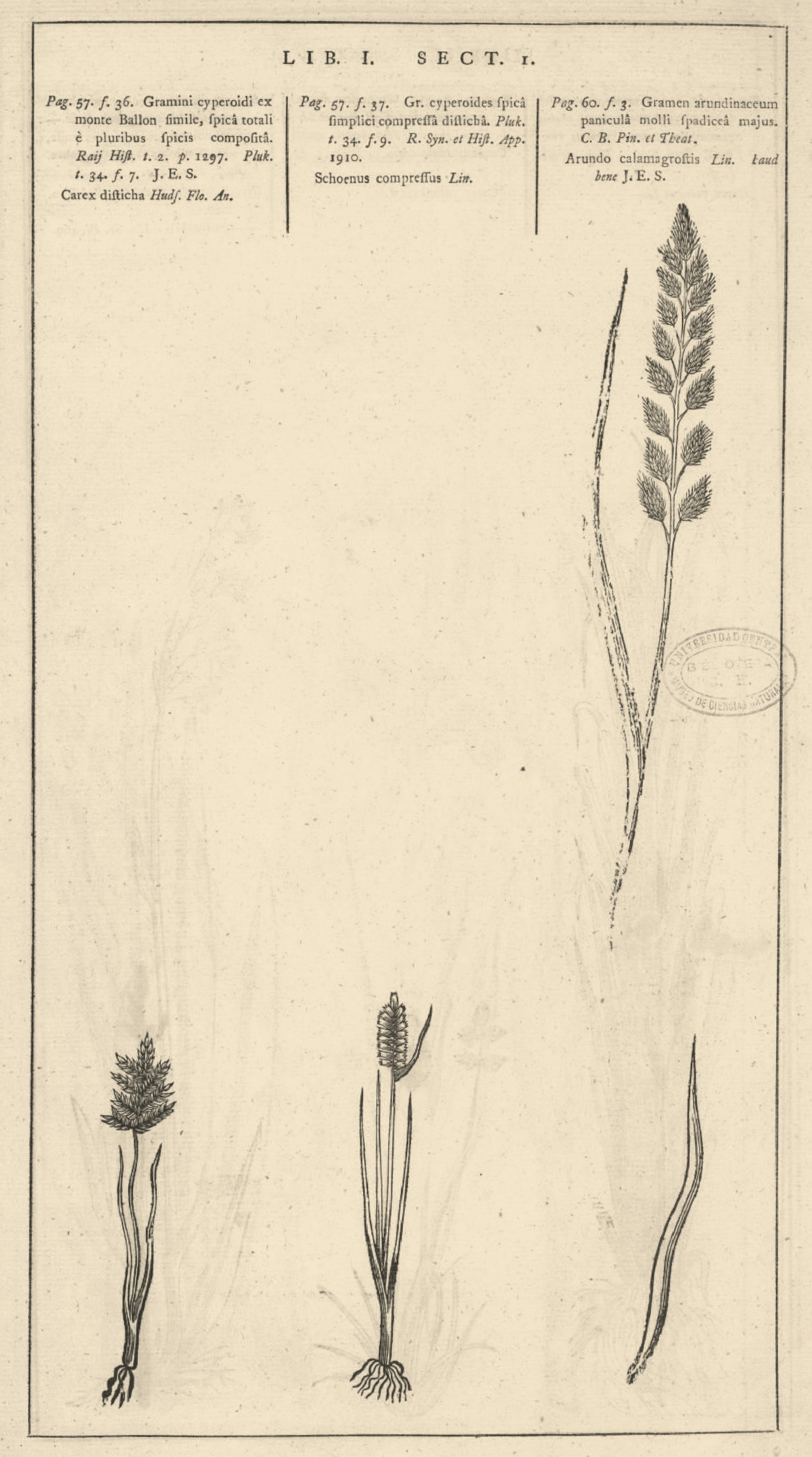
In the Reliquiae Rudbeckianae, woodcuts were published from blocks marked by time and neglect. In brittle form, they rendered visible what remained of the shining vision Rudbeck the Elder and his son had pursued. For them, botany and mythology had been strands that ultimately illuminated one another, as their readings of the Golden Bough or the willow tree in Sápmi illustrate.
After the fire, the visual traces of this thinking became more elusive. For some years, Olof Rudbeck the Younger continued to update the two volumes that had appeared before the fire. In his own hand, he left annotations next to the printed entries. A few of them included pressed specimens he placed between the pages.8
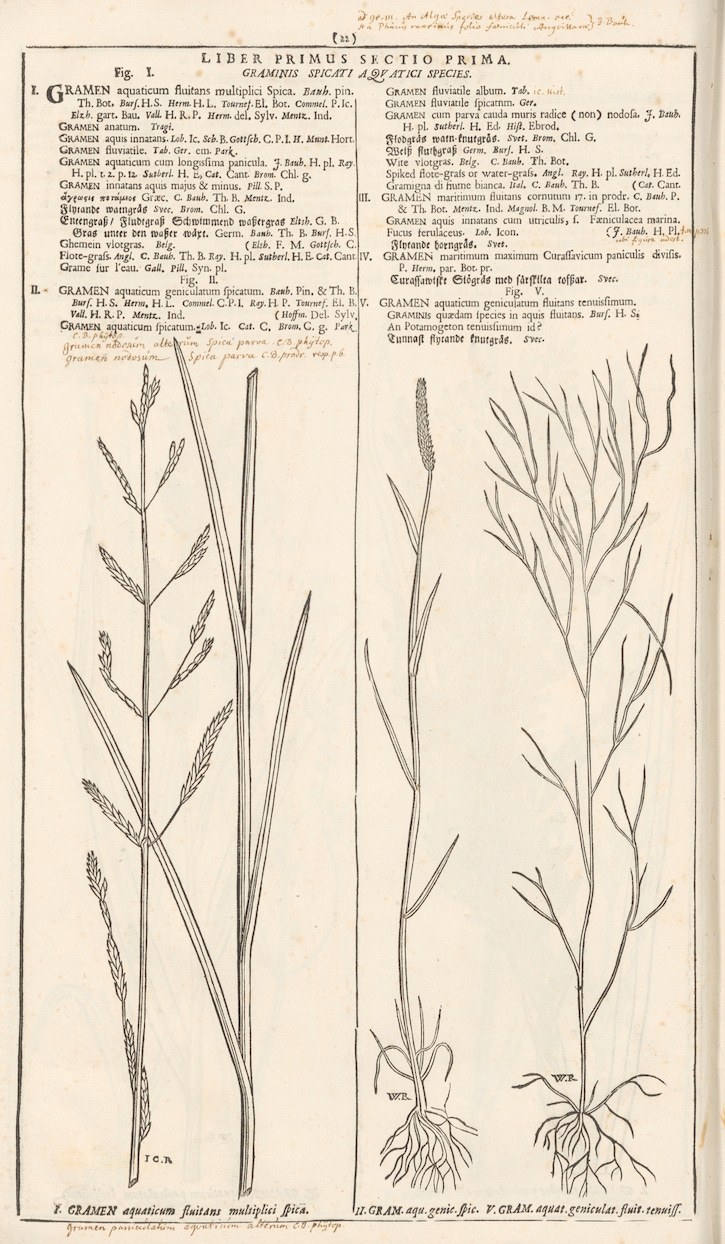
Yet for Rudbeck the Younger, the fire of 1702 also meant the loss of a material basis. As such, it furthered a turn towards linguistic speculation as a means to illuminate the lofty connections he drew between botany, myth, and the Bible. Much of this grand vision never became visible, resting dormant among the volumes of an unprinted work.9
When Rudbeck the Younger died in 1740, the fame of his star pupil Linnaeus was already eclipsing the family’s botanical achievements. In Smith’s time, the bold connections that arched over the Rudbecks’ works had sunk to little more than a curious footnote, floating at the bottom of the history of science, remembered only by a few.
Natural history as practiced by the Rudbecks had fallen out of step with an approach to science perceived as rational, enlightened, systematic – attributes increasingly associated with the name of Carl Linnaeus. By the end of the 18th century, the web of meaning they had spun across botany and myth had become effaced, like the woodblocks remaining from the Campus Elysii.10
In 1702, the dream once shared – to render an Elysian thread visible in the fabric of the world – turned to ashes.
There it still lies, latent.
Further Reading and References
All photographs and translations are my own unless noted otherwise.
When quoting from Latin sources, abbreviations were silently expanded and orthography lightly adapted to current standards.
Please note the general bibliography available here.
See the leaflet “Bränderna i Ljusdal 2018”, published by Ljusdal Kommun.
The best rendering of Rudbeck’s Latin title in the nominative has been discussed in research literature. I follow Henrik Schück and Johannes Rudbeck, who argued for Campus Elysii as most fitting counterpart to the Swedish Glysiswald (the Nordic myth which in Rudbeck’s hierarchy ranked higher); see Johannes Rudbeck, “Campus Elysii. Några bibliografiska anteckningar”, Samlaren 32 (1911), 49–62, pp. 49f. (online at runeberg.org).
See the preface to Olof Rudbeck the Elder and the Younger, Campi Elysii liber secundus, Uppsala 1701 (online at alvin-portal.org).
See Karin Martinsson, Blomboken. Bilder ur Olof Rudbecks stora botaniska verk, Stockholm 2008.
The surviving volumes of this work can be explored on the alvin-portal.org.
This woodblock illustrated Bauhin’s Iuncus acumine reflexo trifidus in the second volume (1702) of the Campus Elysii, p. 105 (online at alvin-portal.org).
See Johannes Rudbeck, Campus Elysii eller Glysis wald af Olof Rudbeck, far och son. Några bibliografiska anteckningar, Uppsala 1911, pp. 59–62, and the brief contribution by Gunnar Broberg, “Olof Rudbeck’s Woodblocks”, in: L: 50 Objects, Stories and Discoveries from The Linnean Society of London, ed. by Leonie Berwick and Isabelle Charmantier, London 2020, pp. 20f.
My account follows Smith’s preface (s.p.) in Olof Rudbeck, Reliquiæ Rudbeckianae sive camporum Elysiorum libri primi, olim ab Olao Rudbeckio patre et filio, Upsaliæ anno 1702 editi, quae supersunt, adjectis nominibus Linnaeanis. Accedunt aliæ quædam icones caeteris voluminibus Rudbeckianis aut destinatae, aut certe haud omnino alienae, hactenus ineditae, ed. Jacob Edward Smith, London 1789 (online at Reál Jardín Botanico Madrid).
In 2024, Roger Gaskell gave a talk “Rudbeckian Remains (Wood Blocks and Botany)” at the Linnean Society (on YouTube).
Uppsala, University Library, Leufstasaml. Ligg. fol. 205 (1). The pressed plants are partly visible in the digitisation on alvin-portal.org.
Helena Backman treats the material briefly on the Uppsala Universitetsbibliotek 400 År-Blog (no. 304, 29 May 2019).
I will treat this work in a forthcoming article on this platform.
See Bernhard Schirg, “Phoenix Going Bananas. The Swedish Appropriation of a Classical Myth, and its Demise in Botanical Scholarship (Engelbert Kaempfer, Carl Linnaeus)”, in: Apotheosis of the North. The Swedish Appropriation of Classical Antiquity Around the Baltic Sea and Beyond (1650 to 1800), ed. by Bernd Roling, Bernhard Schirg, and Stefan Heinrich Bauhaus, Berlin 2017, 17–46.