


This text continues from the article linked below, in which the Idre panorama from Olof Rudbeck’s Atlantica is introduced and the myth of Atlas that he projected on its mountains.

Into the Panorama
Time and again, the Atlantica confronted readers across Europe with a central claim: After millennia, Sweden’s nature still held the keys to reach the core of ancient myth. In his home country, Olof Rudbeck claimed, the gates to this truth stood open for all to see, an epiphany to be experienced with all senses.
The mythical Mount Atlas was no exception to this claim. And so I left for the North, a printout of the Idre panorama in my pocket.
I first touched base with the Northern Atlas on asphalt.
“Welcome to Himmelfjäll”, the billboards passing by the bus windows read. “Snow guarantee from 21 December until 19 April.”
At the end of the aisle, red LEDs announced the next stop: Idre Fjäll.
With a hissing sound, the rear door opened. A crisp autumn breeze cut through the overheated air. From an empty bus, I stepped down onto a deserted parking lot.
At the end of the concrete expanse, snow cannons stood parked on stilts, the wind moving idle fans inside.
Vans of carpenters and plumbers parked in the driveways that I passed on my path to the first outlook. Along the cottages, plastic foil fluttered in window cutouts. Panorama maps on the way showed the skiing resort that had opened in the Idre mountains the year before.
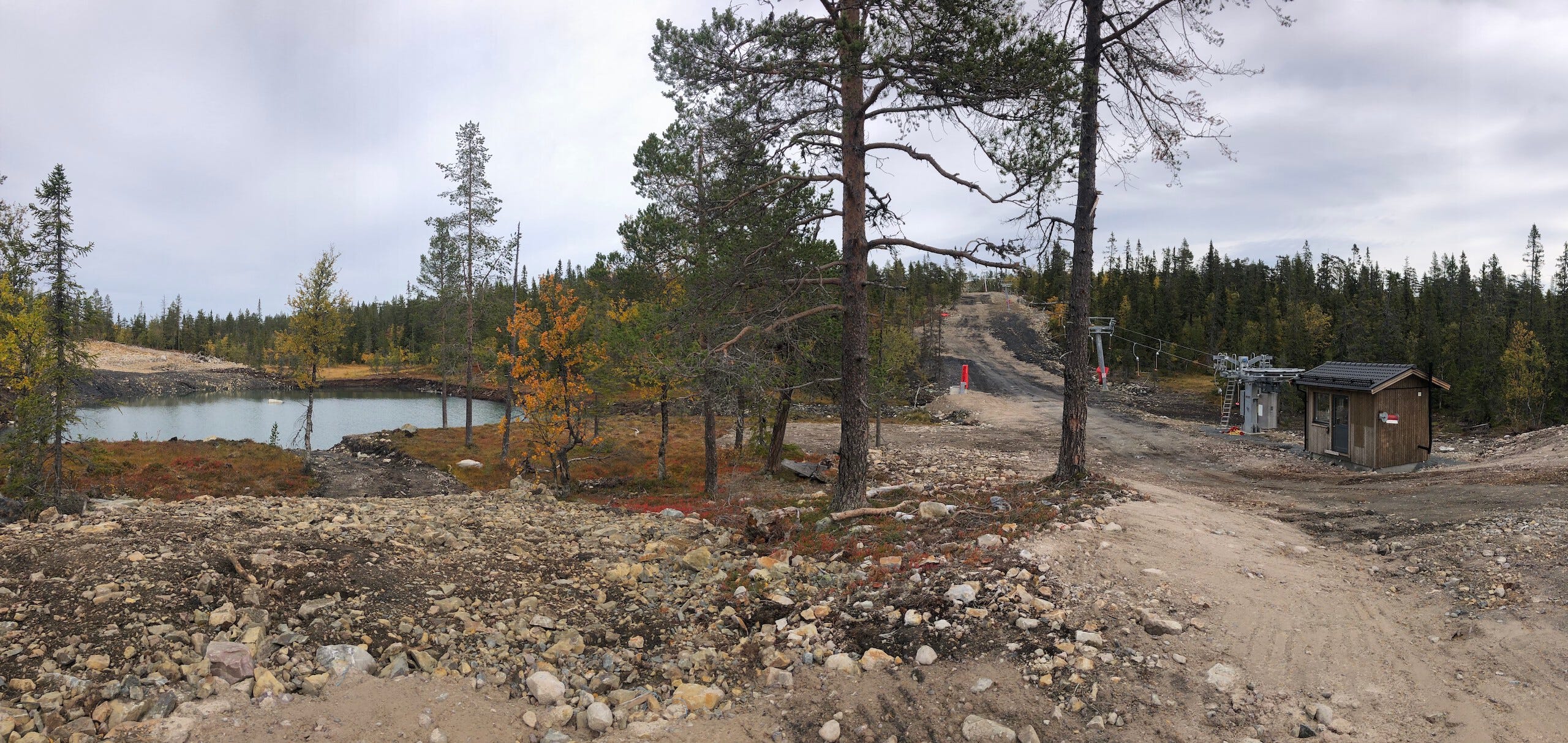
A swathe in the forest led uphill, lined by lift pylons. Wrapped around their concrete bases, paddings flashed in factory-fresh red colour. To their side, a dugout for the snow lances, with excavator bites still along its rim.
At the top of the hill, a gravel-clad plateau widened, furrowed by the tracks of Caterpillars. Button seats dangling over my head, I sought orientation in the printout.
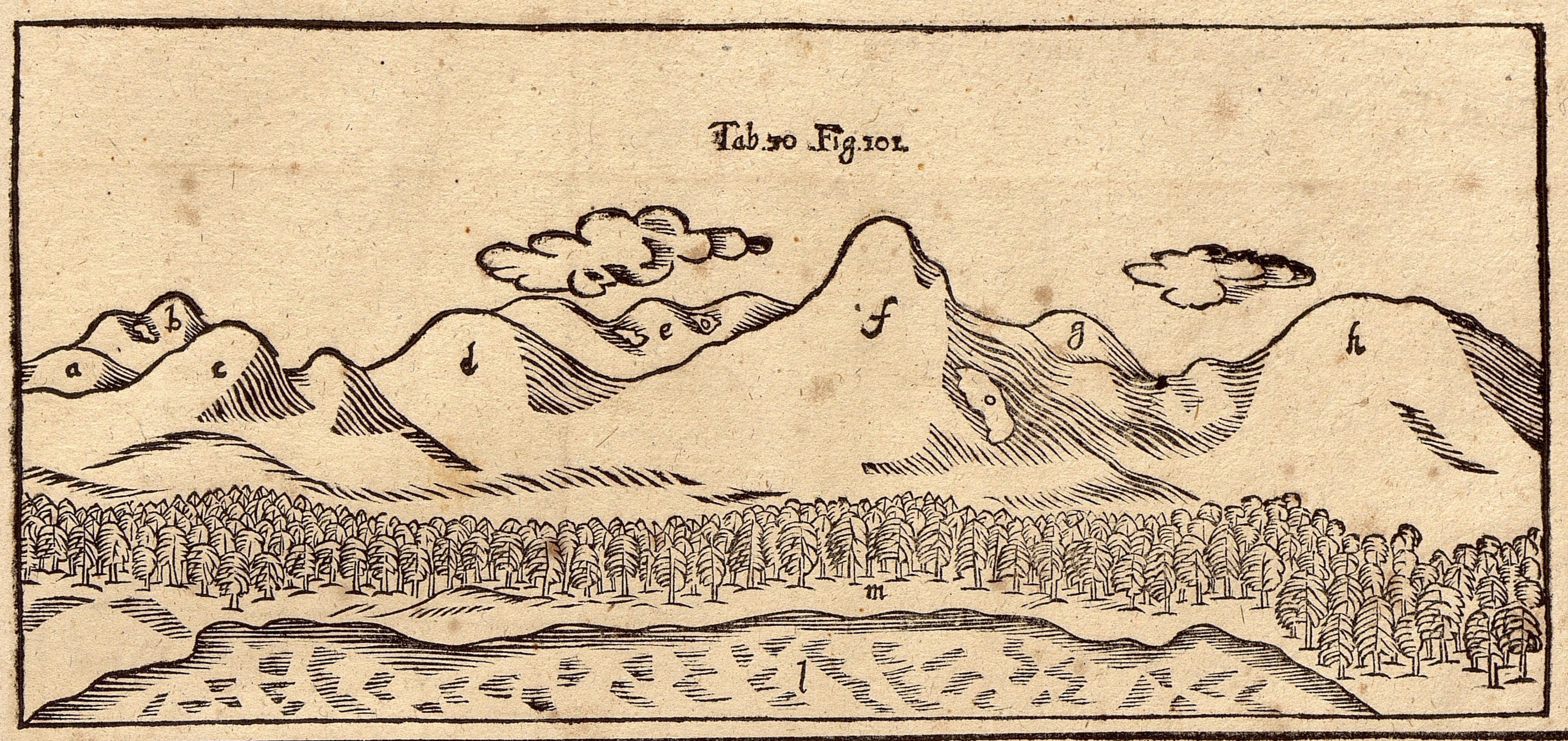
I was now inside the panorama, I assumed, standing somewhat left of the peak marked as (d).
Manufactured Winters
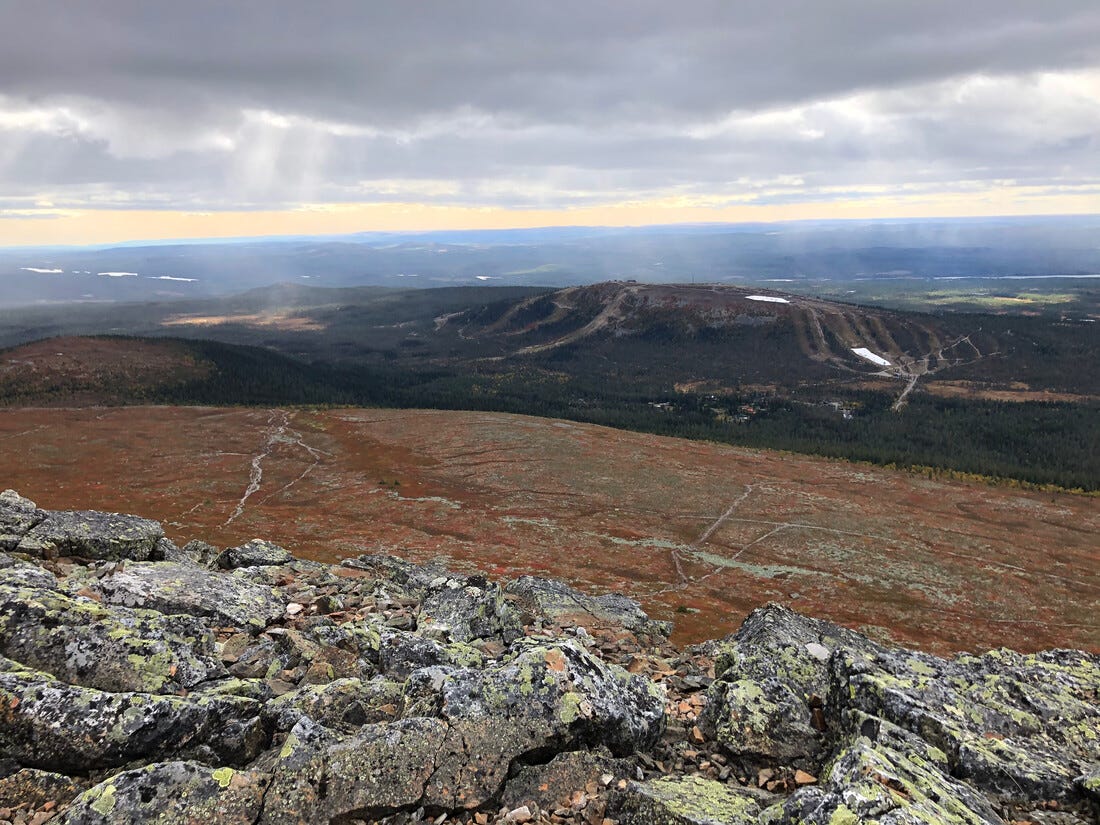
A few glaring dots drew my attention to a neighbouring hill.
White surfaces reflected rays of sun that made it through the overcast sky. Near the top of the ski pistes, tons of snow awaited the coming season under plastic foil.
From my readings before the journey, Vergil’s lines came to mind, on the snow on Atlas’s shoulders, and Rudbeck’s reports on the fields of snow that his men had still seen here in summer.
In Northern Dalarna, sights like that have become a thing of the past.
Even in winter, there are already entire months without snowfall. By mid-century, the average season in Sweden’s skiing resorts is projected to shrink by twenty days.1
The developers’ vision unfolds a landscape unaffected by such changes.
Unbroken blankets of white covered the mountain panoramas that I had passed on my way. In this projection, it seemed as if a few of Rudbeck’s gods still shimmered through the layers of a transformed environment: near the feet of ski pistes, the names Neptune and Mercury lent mythical lustre to clusters of freshly built chalets.
Trees Beyond our Sense of Time
Beyond the lifts, the Idre mountains changed register.
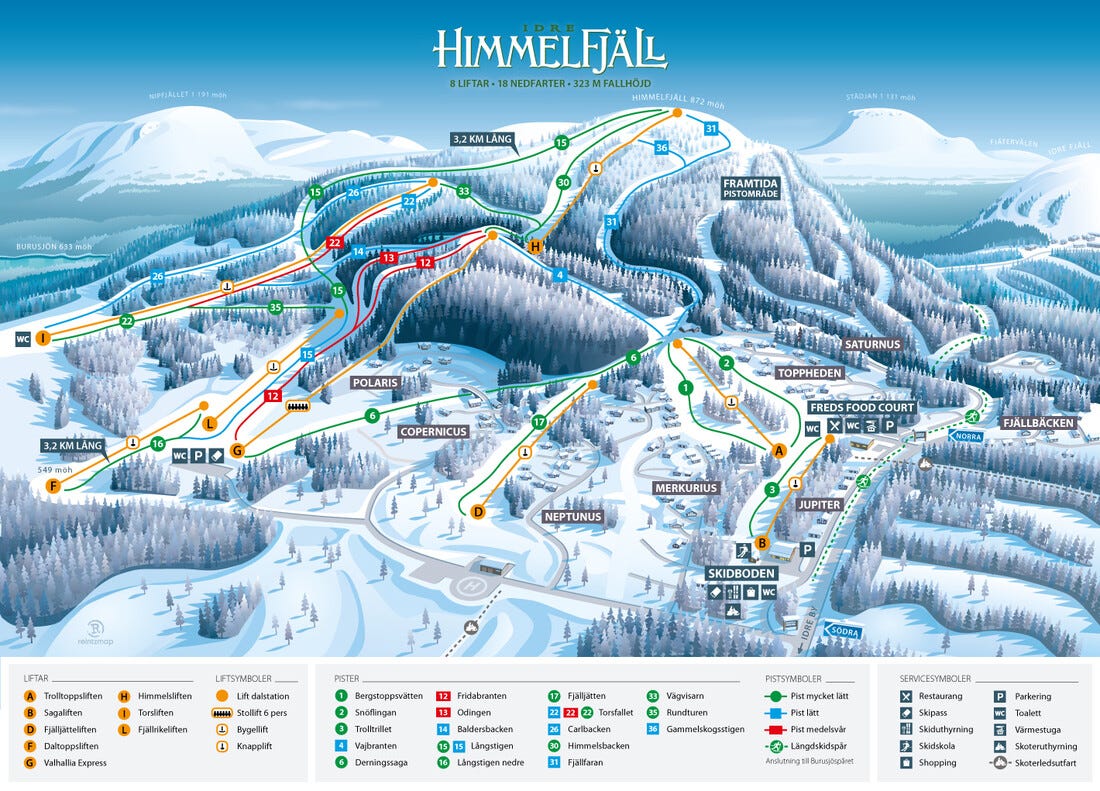
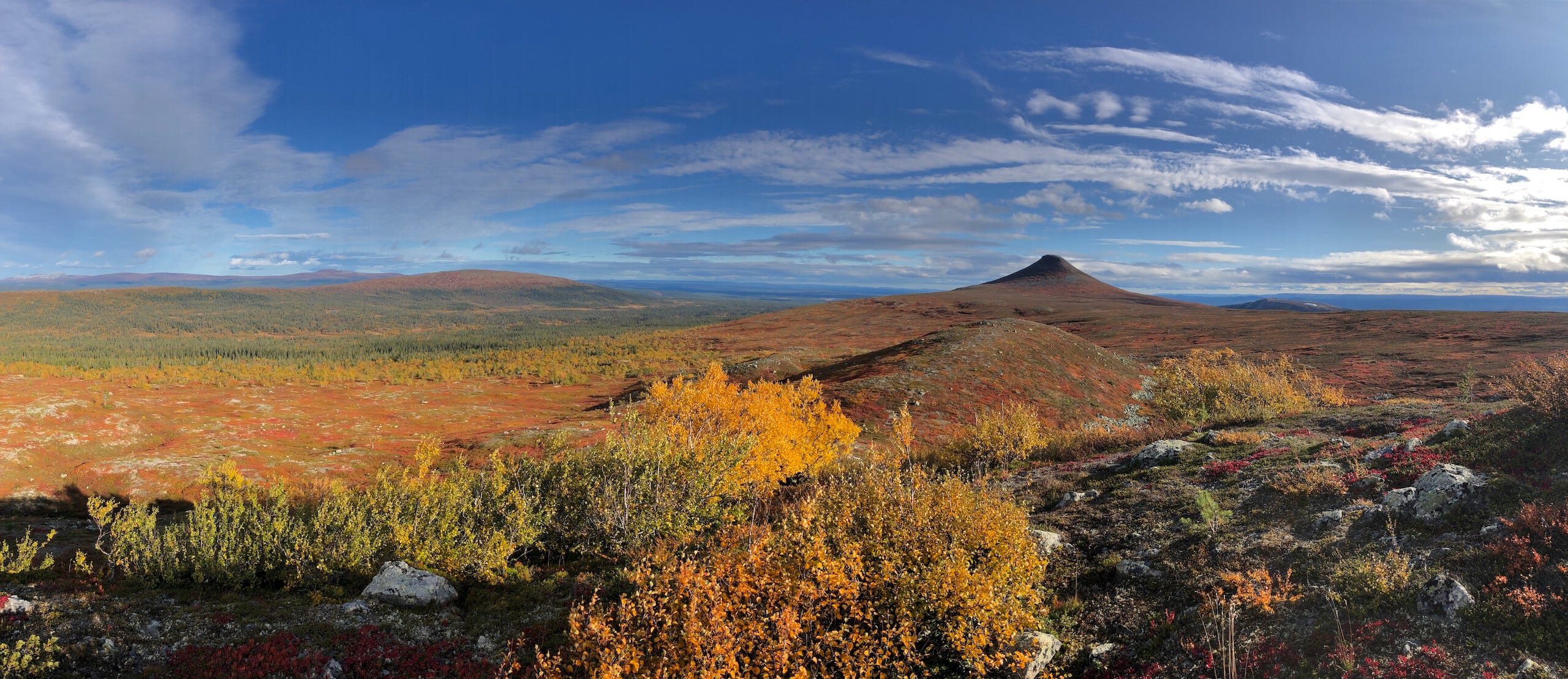
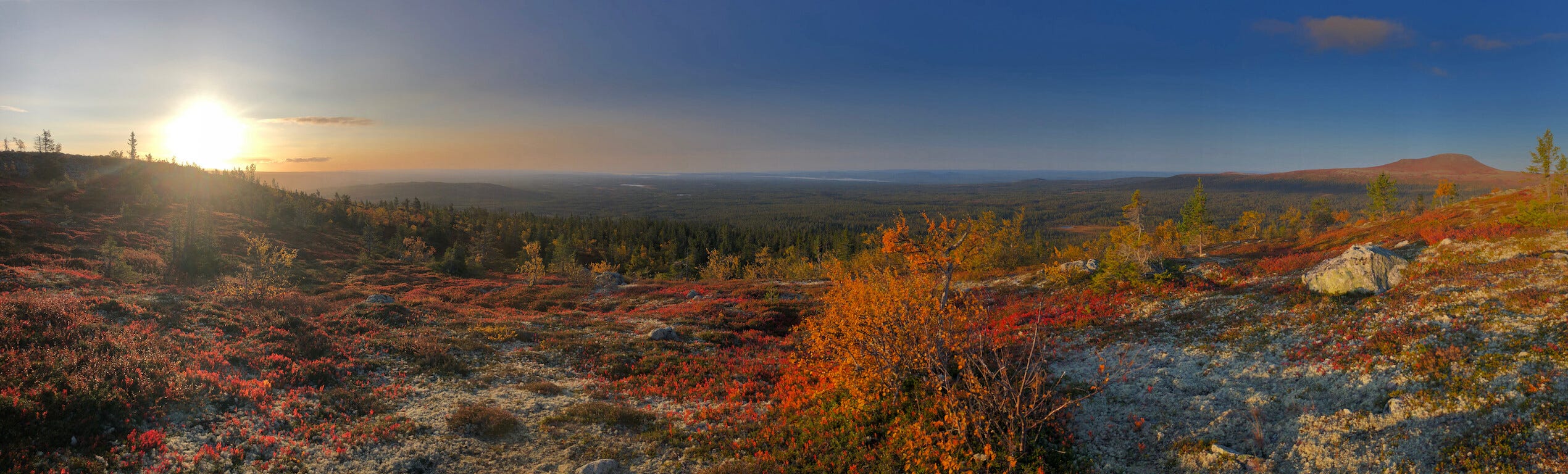
For the night, I hiked into the forests that spread around Städjan, into the ‘Beard of Atlas’ as Rudbeck interpreted the trees around the centre peak of the panorama (see ‘f’ above).
Städjan means ‘anvil’ in Swedish, its profile dominating the views of the range. With 1,131m above sea level, the peak has somewhat fallen from the Olympus of the worlds’ highest mountains among which Rudbeck had once counted it.
With the first sun, fragrances of earth and fungi rose from the sponge-like ground that absorbed my steps towards Städjan’s top. Silvery stumps and logs pierced the carpet of moss, lichen, needles, and blueberry shrubs.
From the branches, black streaks of tagellav-lichens wavered in the wind like wisps of a primeval creature caught in the conifer branches. In the distance, the hammering of a woodpecker.
Today, 24.500 hectares around Städjan are designated as a nature reserve. Trees are left to grow and die undisturbed. When they fall, their wood remains part of the forest, providing habitats and sustenance for trees, plants, lichen, mushrooms, microorganisms, mammals, birds, and insects.
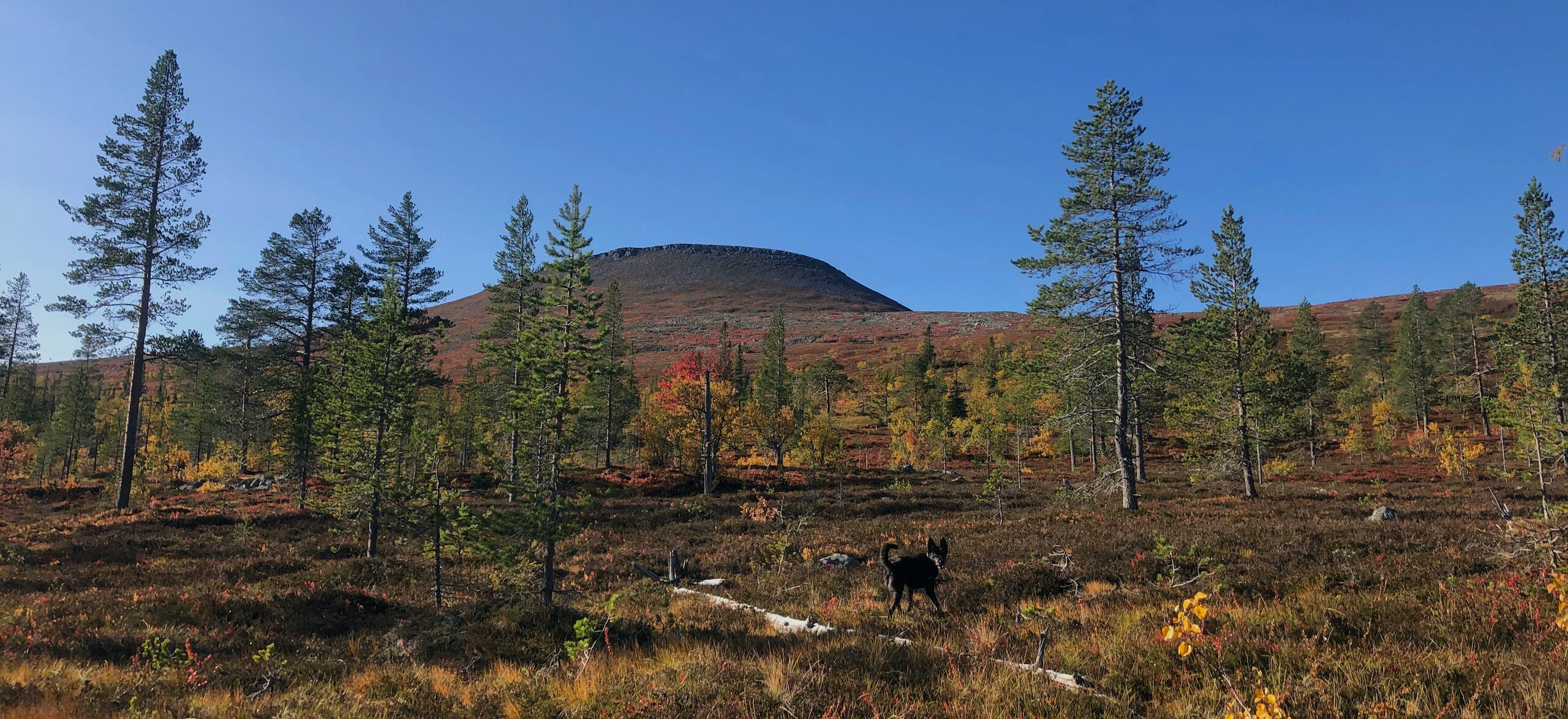
Some two hundred meters below the top of Städjan, I found the trees thinning out. Further up, a few crooked still shrubs dot the treeless ground of the fjäll.
Under the climate conditions around 1900, the forest ended further below.
Already Carl Linnaeus described its vegetation in his Dalaresa (‘Voyage through Dalarna’). When he climbed Städjan in 1734, the young botanist noticed the low brushes that hugged the slopes above the tree-line, resembling roots grown into the earth.2
Many of these shrubs are stunted spruces.
Cowering near the ground, they have weathered the storms, snows, and forest fires assailing Northern Dalarna for centuries. Some of them have seen the last Ice Age recede.
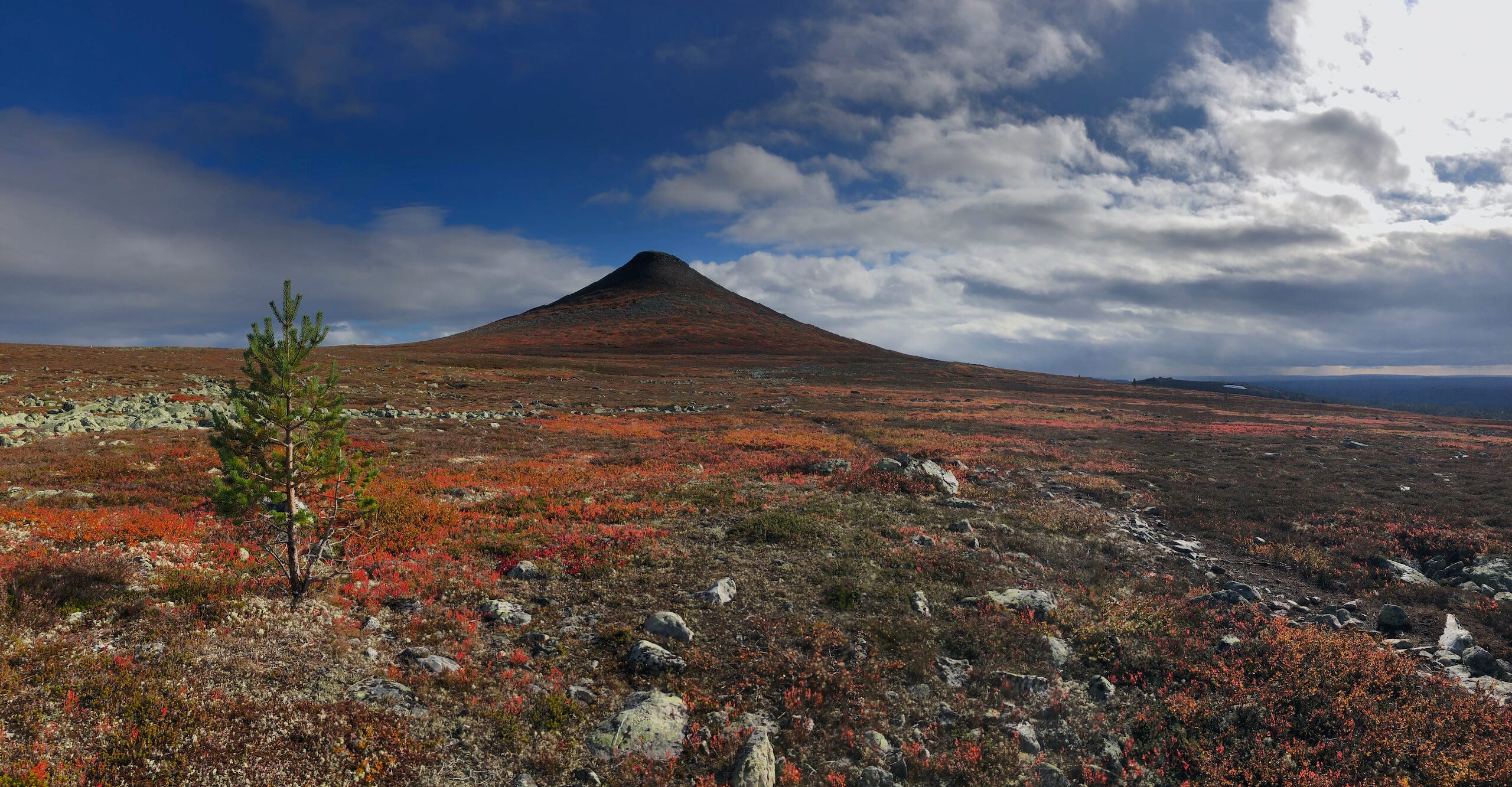
With temperatures rising, many of these veteran trees now have started new offshoots.3 Among them ranks the so-called Linnégranen (‘Spruce of Linnaeus’), whose roots biologists in recent decades could date to 4420 years, or the oldest tree in the world in the neighbouring Fulufjället.4
In Rudbeck’s imagination, such ages led deep down into the chronological charts he printed in his Atlantica, to times when he believed the waters of the Deluge to have first receded from the world’s highest peaks, and when Japhet arrived to Sweden’s mountains to re-settle Europe – an event that in his view marked the outer margin of imagined time.
The Values We See
A stiff wind scraped the top of Städjan. Leaning into the gusts, my eyes followed the spotlights which fell through holes in the overcast sky, on the forests that followed the ice when it receded millennia ago.
The wandering shafts of light illuminated the expanse through which the Dalälven River flowed, shimmering like a band of mercury.
In steady rhythm, patches of brown lit up in the lustre cones.
A front line runs through the landscape. Clearcut areas and ski pistes adumbrate where the nature reserve that surround the peak ends. Not too long ago, there were debates on building lifts on Städjan itself.
When the reserve was declared around Städjan, biologists raised “nature types uninfluenced by man with a natural set of species and ecological function”.5
In habitats left undisturbed, life grows in interdependency. The lichen hanging from the trees feed the reindeer in wintertime. Over the past decades, the work of researchers as well as artists has widened our understanding of interconnectedness between trees, plants, mushrooms, microorganisms, mammals, birds, and insects, and deepened our sense of awe.6
After a clearcut, these ecosystems are lost. Some may take a century to form anew. Others of these interacting systems are, once destroyed, next to impossible to re-create.
Many of them may still lie beyond our grasp.
Administering Awe
Among the largest forest owners in Sweden are state-owned companies.
For many decades, clearcutting was carried out backed by a narrative that forests cut and replanted in the north helped build schools and light hospitals elsewhere in the country.
In 1993, the Swedish government liberalised forest laws. Responsibility has largely resided with landowners, bound primarily by principles such as ‘frihet under ansvar’ (‘freedom bound by responsibility’) and ‘allmän hänsyn’ (‘general consideration’).
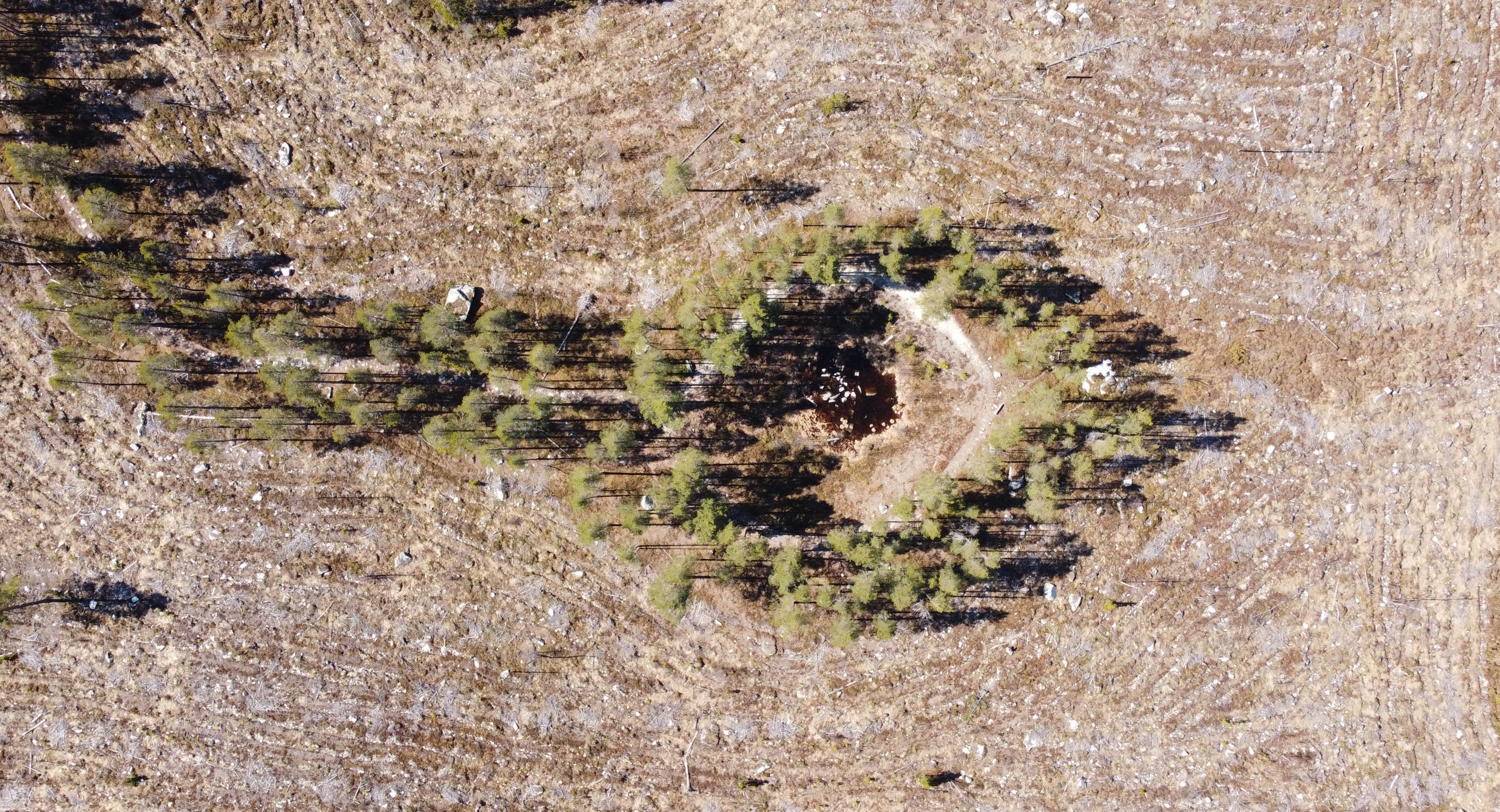
Although Swedish law requires biodiversity checks before clearcutting, their vast majority is carried out without any prior examination.7 Over the past decades, most of the ancient forests in Sweden have been – and continue to be – replaced by wood plantations, in particular in the north, where ecosystems take even longer to form and to recover.
Yet cutting living ecosystems and replanting them is a gamble in the 21st century. Sapling planted today may never grow to full size again as soil and climate conditions change. The atmospheric carbon dioxide they once stored may never be bound again.
Scientists invoke so-called ‘services of forests’ of this kind in their defence. Yet beneath the tree lines lies an even deeper layer – the meanings we find in them.
The ancient myths that Rudbeck connected to the forests at Idre is just one layer in this palimpsestic process by which we inscribe and re-inscribe the world with stories. The ones we tell today define how we connect to the world around us, what value we grant it, how we care about it.
The forests around us store them, too, layer on layer – the stories of who we have been.
Descending through the forests ebbing from Städjan slopes, I passed one of the rare pockets in which giant trees still grow.
When Rudbeck’s expedition neared the mountain in 1675, some of them had still been saplings. Close to the veterans, the ground bulged with stumps overgrown with moss – the remains of trees that took centuries to grow and several men to embrace.
The tallest of them did not survive to the present day. In the decades of dimensionsavverkning around 1900, loggers hiked up and skimmed the forest.8
Floated down the Dalälven, their stems would serve as beams in railway bridges.
The Elusive Panorama
I remember the moment I had given up my search for the vantage point.
After a few days in the mountains, I had tried to move out of the panorama, crossing over the Dalälven River (l) that widens into a lake near Idre.
On gravel road, I wandered along the forest on the southern bank. Clearings opened along the path, offering glimpses back to the ski resorts of Idre and the bald peaks rising beyond. Rags of barrier tape flapped from a few toothpick trees, the names of lumber companies barely legible on the sun-bleached plastic.
I felt my feet sink into the ground as I headed uphill, towards a treeless elevation, across a carpet of white lichen and blueberry bushes that the seasons had left in fiery red.
Next to tracks that harvesters had ploughed, fir saplings rose in geometric patterns from the undergrowth.
This once had been a living forest.
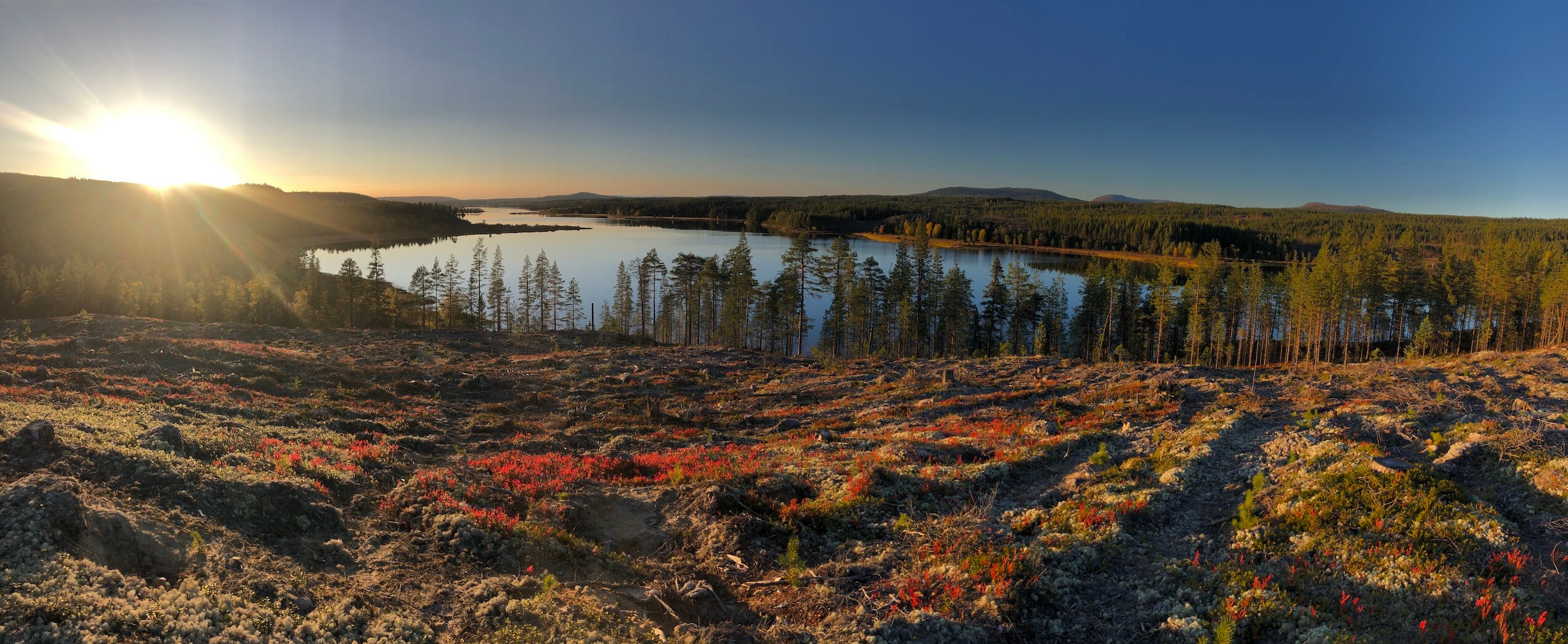
The machines had left a thin line of trees standing.
Above its veil, I beheld the Idre range.
In front of me, the last rays of sun filled tyre marks on the ground with shadows. On my skin, I felt the air around me growing colder.
One last time, I reached for the worn-out paper in my breast pocket. From the hilltop, I tried to find my position in the panorama.
From beneath, I heard throaty calls carry up from the river valley – the swans I had crossed paths with earlier, their wedge floating downstream beneath the Dalälven bridge.
The silhouette still was far off from what the panorama showed.
This doesn’t make sense, I thought, and looked for even ground to spend the night.
The Second Journey
On a clearcut in Dalarna, I had given up the search to find the original vantage point of Rudbeck’s Idre panorama.
A few weeks later, I returned to it on the threshing floor of an artist’s barn.
On the Hallnäs Peninsula, some two hours north of Stockholm, a young couple had turned the family farm into a retreat for artists. A few houses, painted in Falun-red, nested in a forest flaring up with yellow birches.
Through a half-open window, the wind carried scraps of sound from waves in the distance. A few kilometres from here, the Dalälven reaches the Baltic Sea. The last sun poured over the notes from my journey, shafts of light sculpted by the window frame.
From my backpack, I heaved a leather-bound volume onto the desk that I had borrowed from the library at Uppsala. In the work by Karl-Erik Forsslund, I travelled upstream one more time.
More than a century ago, the Swedish Romanticist had embarked on journeys along the Dalälven River. In the years around World War One, he published the first parts of his ‘With the Dalälven from its Sources to the Sea’.9
In this work, Forsslund unfolded a vision of pristine lands upstream along the river, recounting days of travel and nights spent under summer skies, or as a guest of farmers whose homes and dresses he photographed and whose songs he printed like relics in need of conservation.
Forsslund described his journey up the Dalälven as a journey back in time, leading through all ages of human development: from the smoke-belching factory chimneys near the coast to the farms of Dalarna, a region that resonated with Forsslund and many others of his time as a contrast to the industrialising cities. Further upstream, where the Dalälven has its springs in the mountains, he believed to have encountered humankind’s first state as nomads, which he associated with the Sámi near Idre.
Leafing through Forsslund’s pages, I travelled along the Dalälven again, to the peaks that I had left behind around Idre.
At a photograph showing the church at Särna overlooking the river, I paused.
The silhouette beyond the steeple.
The proportions were more humble. Yet clear as iron sights, the peaks on the horizon aligned around Städjan, matching the view in Rudbeck’s panorama.
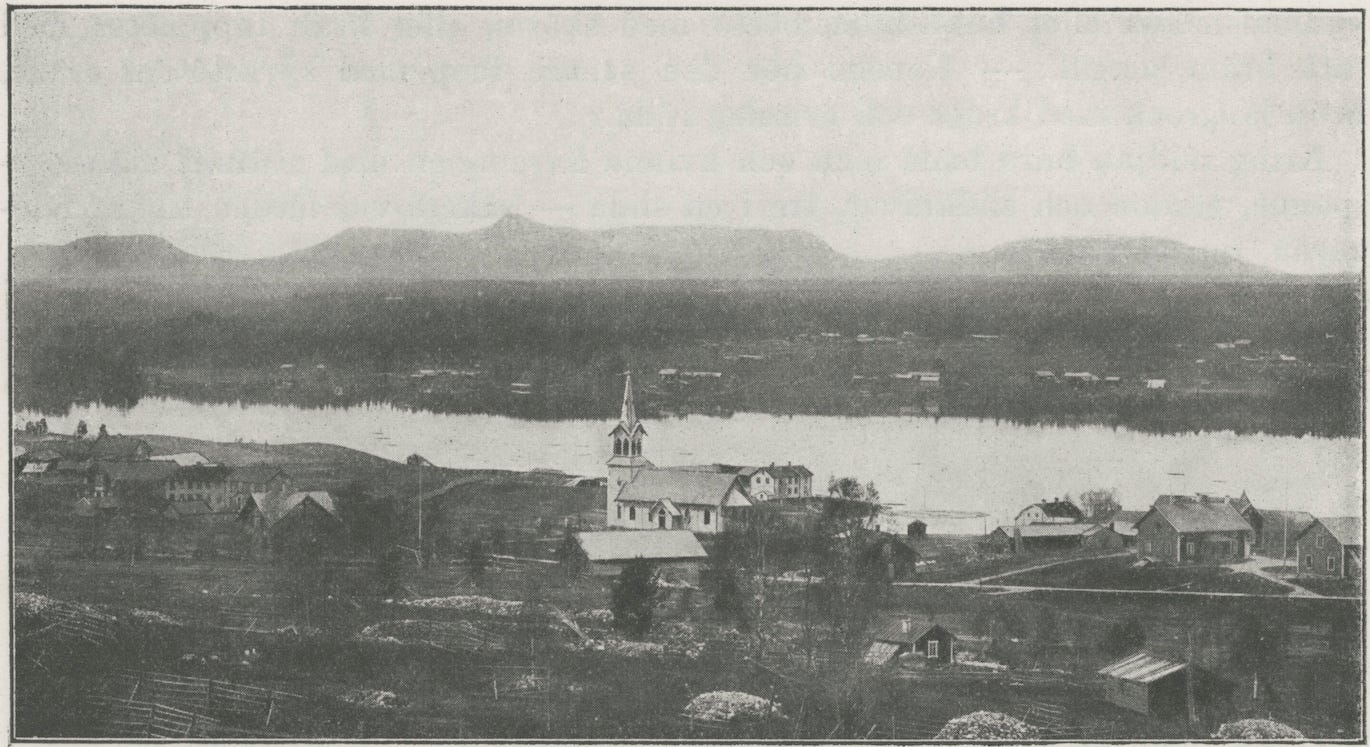
In a single moment, everything fell into place. I had been looking in the wrong place.
What Rudbeck described as ‘lake formed by the Dalälven’ in the Atlantica (‘l’ in the panorama) had never been the river that widened near Idre.
It was the same river that widened once more, some thirty kilometres further downstream.
In reality, the area between the water and the mountains covered by the ‘Beard of Atlas’ (‘m’ in the panorama) expanded across dozens of kilometres. I had been misled by the ways Rudbeck’s draughtsman had conveyed proportions and distance.
Leaning back into the chair, I folded my hands behind my head and stretched my shoulders. Dust mites danced in the light of the desk lamp.
I had searched too close to the mountains to see this view emerge, the insight settled.
Reaching for the light switch to call it a night, my view passed over the mountain silhouette on the photograph again and the grains of dust that had settled.
With the back of my hand, I wiped over the page.
The specks stayed. Only then did I notice the logs.
The photograph showed the harvest from the forests floating down the river, towards the sawmills in the south.
Upstream, the plucking of Atlas’s Beard had begun.
Further reading and references
All translations and photographs are my own unless stated otherwise.
Acknowledgments
I have to thank Lennart Bratt for his support in the field and the insights he shared with me. Further thanks go to Åsa Norling, Peter Sjökvist, Sven Widmalm, and Maria Ågren.
On Clear Cutting
For an overview and outlook of the situation in Sweden see this study as presented by Johan Joelsson, “Ny studie avslöjar omfattande kalhuggning av svenska naturliga skogar”, 9 November 2022 (online at Lund University).
In recent years, the topic of deforestation in Sweden has attracted coverage in international newspapers, see for example:
Marcus Westberg, “‘Forests are not renewable’: the felling of Sweden’s ancient trees”, The Guardian, 14 April 2021 (online here).
Richard Orange, “Sweden’s green dilemma: can cutting down ancient trees be good for the Earth?”, The Guardian, 25 September 2021 (online here).
Greta Thunberg, Lina Burnelius, Sommer Ackerman, Sofia Jannok, Ida Korhonen, Janne Hirvasvuopio, Jan Saijets, Fenna Swart, Anne-Sofie Sadolin Henningsen, “Burning forests for energy isn’t ‘renewable’ – now the EU must admit it”, The Guardian, 5 September 2022 (online here).
Alex Rühle, “Radikahlschlag”, Süddeutsche Zeitung, 14 June 2023 (online here).
Alex Rühle, “Das Verschwinden der Wälder”, Süddeutsche Zeitung, 23 Juni 2025 (online here).
Director Peter Magnusson treated the topic in his 2021 film Om Skogen (96min).
Activist groups in Sweden such as Skydda Skogen (‘Protect the Forest’) and Skogsupproret (‘The Forest Rebellion’) fight against deforestation and the colonial approach that their own country practices in the North and on Sámi territories.
In Sweden, the voices against clearcutting have become louder and reached public institutions. In 2023, for example, Uppsala University declared to abstain from clearcutting at least in parts of the large forest areas (some of them nature reserves) that have historically been managed by the institution (see press release on uu.se from 20 February 2023).
Please note the general bibliography available here.
This is an estimate by the Swedish Meteorological Institute, see Mats Ekdahl, Snöns histora, Stockholm 2019, p. 71.
See Carl Linnaeus, Dalaresa, Stockholm 2024, p. 64: “Ovanpå berget, vid pass 360 alnar högt, var ett konvext ampelt fält, bart från träd och buskage, förutan att några små frutices fingo över jorden den form, som dess rötter under jorden, det är vuxo in vid jordens superficies, att dess grenar liksom ville gömma sig under jorden.”
See Lisa Öberg, Treeline dynamics in short and long term perspectives. Observational and historical evidence from the southern Swedish Scandes, Sundsvall 2010 (online at Diva).
A first introduction to the veteran trees of Sweden is provided by Lisa Öberg and Leif Kullmann, Fjällens urgamla granar: en faktabok, Östersund 2013 (see pp. 30f. for Linnégranen).
See the argumentation in “Revidering av beslut samt skötsel- och bevarandeplan för Städjan-Nipfjällets naturreservat i Älvdalens kommun”, published by Länsstyrelsen Dalarnas Län, decree from 21 Dec 2020 (511-10003-2018), p. 3: “Städjan-Nipfjället utgörs av i huvudsak av människan opåverkade naturtyper med naturlig artsammansättning och ekologisk funktion.”
See Dacher Keltner, Awe. The New Science of Everyday Wonder and How it Can Transform Your Life, New York 2023, pp. 136–8.
Owners are required to notify before clearcutting. If authorities do not respond or fail to carry out a field inspection for biodiversity within six weeks, land owners are free to proceed. Estimates suggest that 96 percent of clearcuts are carried out without prior field inspection. Cf. the article by Erik Hoffner, “Sweden’s Green Veneer Hides Unsustainable Logging Practices”, Yale School of Environment, 01 December 2011.
On the history of the local forests see Kurt Alinder, "Särna- och Idreskogarnas historia under svensk tid. Ett bidrag till deras rätthistoriska utveckling", in: Särna – Idre 300 år. En hembygdsbok, Särna 1945, pp. 103–36.
Karl-Erik Forsslund, Med Dalälven från källorna till havet. Med över 4000 illustrationer och talrika planscher, Stockholm 1918-39.