


Reaching for the Atlas Mountains
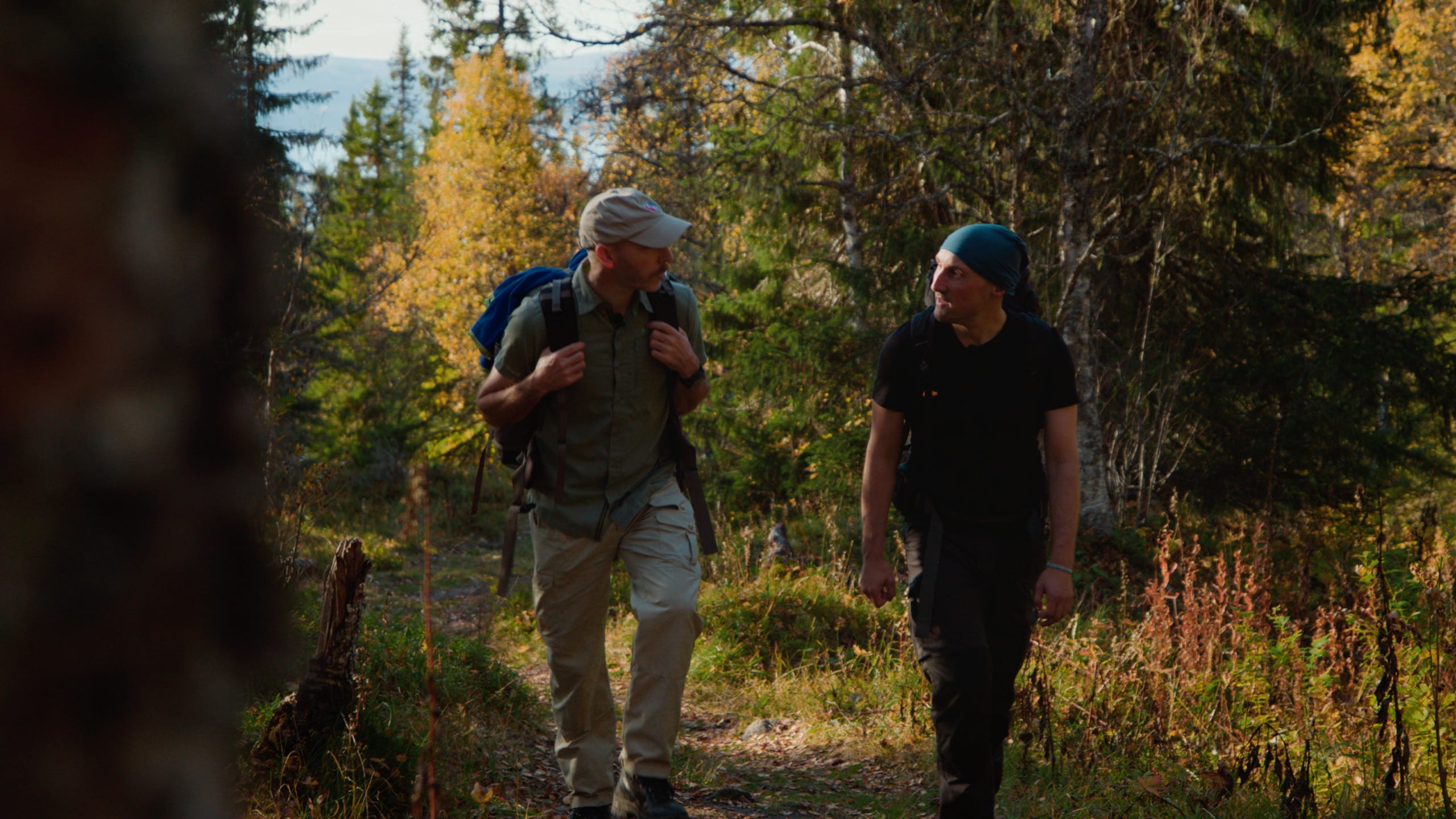
There is a scene in Frozen Atlantis that traces the first outing I undertook with Lars in Jämtland. Ascending a vantage point through an autumn forest, the dialogue gives shape to the vision in which Rudbeck rendered both the largest and the smallest features of Sweden’s landscapes as carriers of meaning:
“He has all these magnificent stories to tell, from something as large as a mountain down to the tiny needles of a tree – it’s all charged with a deeper meaning, and that changes the sense of connectedness you have to this world.”
For Olof Rudbeck, this way of seeing made mythical places named by classical writers shimmer through the nature of his home country. Their works featured names such as the Hyperborean Mountains or the Atlas Mountains.
In Rudbeck’s interpretation, these all pointed to the mountain chain rising between Norway and Sweden. In his view, the ancients had used a host of synonyms to refer to the same imposing mountain range.

Identifying them correctly was tantamount to a geographical claim. In the maps accompanying the first volume of his Atlantica (1679), he distributed their names all across the northern mountains. With the help of an expedition he sent to these mountains four years before, Rudbeck had gathered evidence to substantiate the claims his work laid upon mythical geography.
Among these, the Atlas Mountains took a key role.
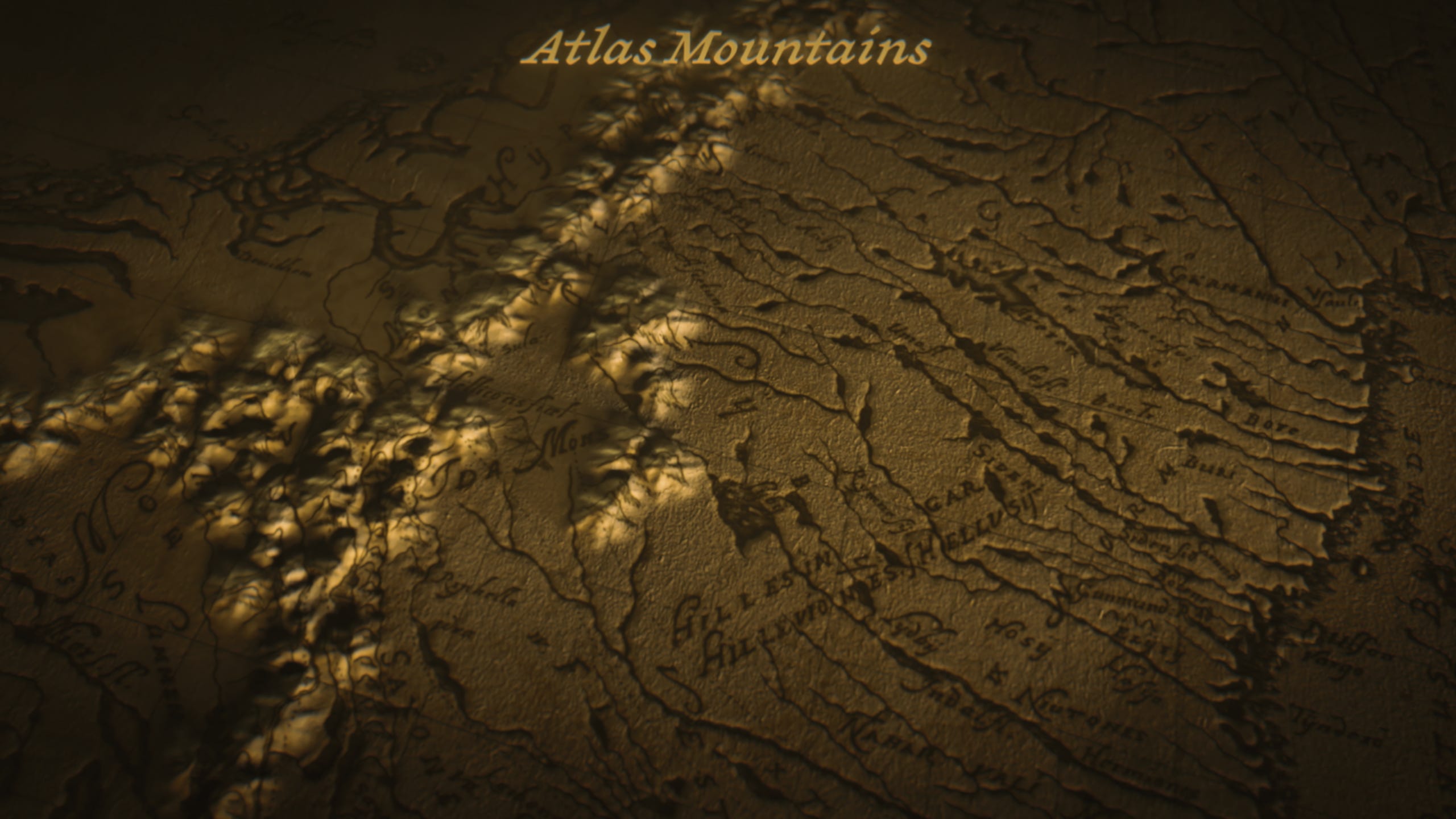
In Rudbeck’s narrative, Atlas was the first of Sweden’s kings – the namesake of the true Atlantis. From their journey to the North, his students brought back mountain panoramas as evidence. In their features, Rudbeck sought resonance with myths ancient authors related about Atlas.
Among them was the Roman poet Ovid. In the Metamorphoses, Atlas features in the story of Perseus, who turned the petrifying head of Medusa against the defiant king. In the transformation that followed, Atlas’s bald head turned into a mountain peak, and his rugged beard became the forest around.
For Rudbeck, this story created a link between myth and the Swedish landscape. Pointing to a mountain panorama from Idre, he proudly claimed that features described as those of a transformed god could be found in Northern Dalarna: There, the treeless top of Mount Städjan towered over outliers of what Rudbeck considered the true Atlas Mountains – with rich forests girding the slopes beneath.
The Needle in the Woodstack
Botany allowed Rudbeck to buttress this claim from a further angle.
In his Natural History, the Roman encyclopedist Pliny had touched on the Atlas Mountains and their flora. As he related 1,700 years before Rudbeck, this range is
“filled with dense and lofty forests of trees of an unknown kind, ... with very tall trunks remarkable for their glossy timber free from knots, and foliage like that of the cypress …”
Pliny, Natural History, V.14 (tr. H. Rackham)
For Rudbeck, this was not a descriptive aside: it was a point of departure to strengthen his claim even further. Identifying the cypress-like tree unknown to the Roman author became tantamount to claiming the true Atlas Mountains.
Rudbeck unfolded the full line of reasoning in the third volume of the Atlantica.1 Here he printed about a dozen woodcuts depicting needle trees. With the help of the illustrations, he zeroed in on what he saw as the only legitimate candidate for Pliny’s tree.
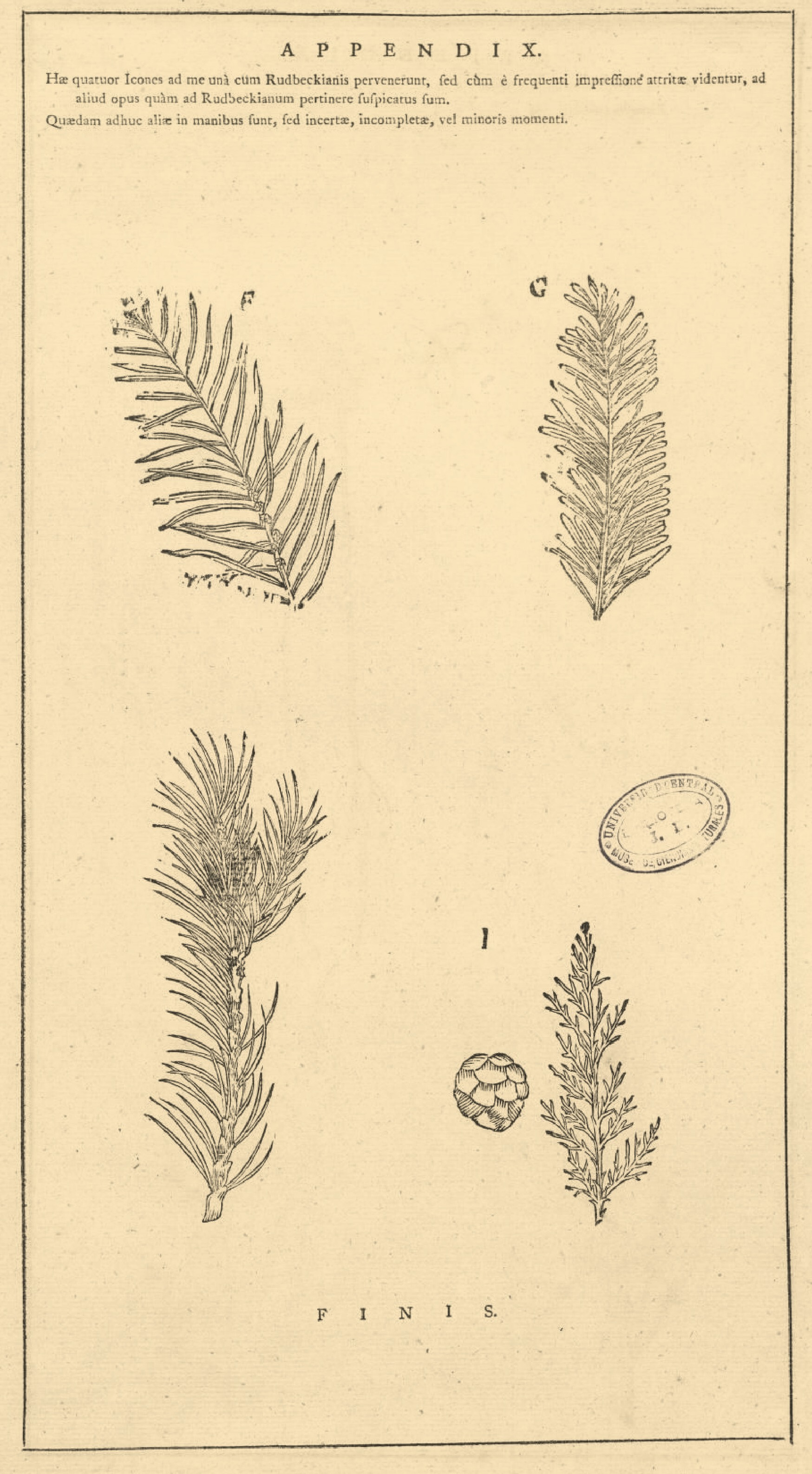
His argument begins from an actual cypress twig (I in the illustration below). A key feature of this tree, Rudbeck elaborated, were its comparatively small needles, measuring half a finger in length. Drawing on comparative material, Rudbeck ruled out the contenders for Pliny’s conifer.
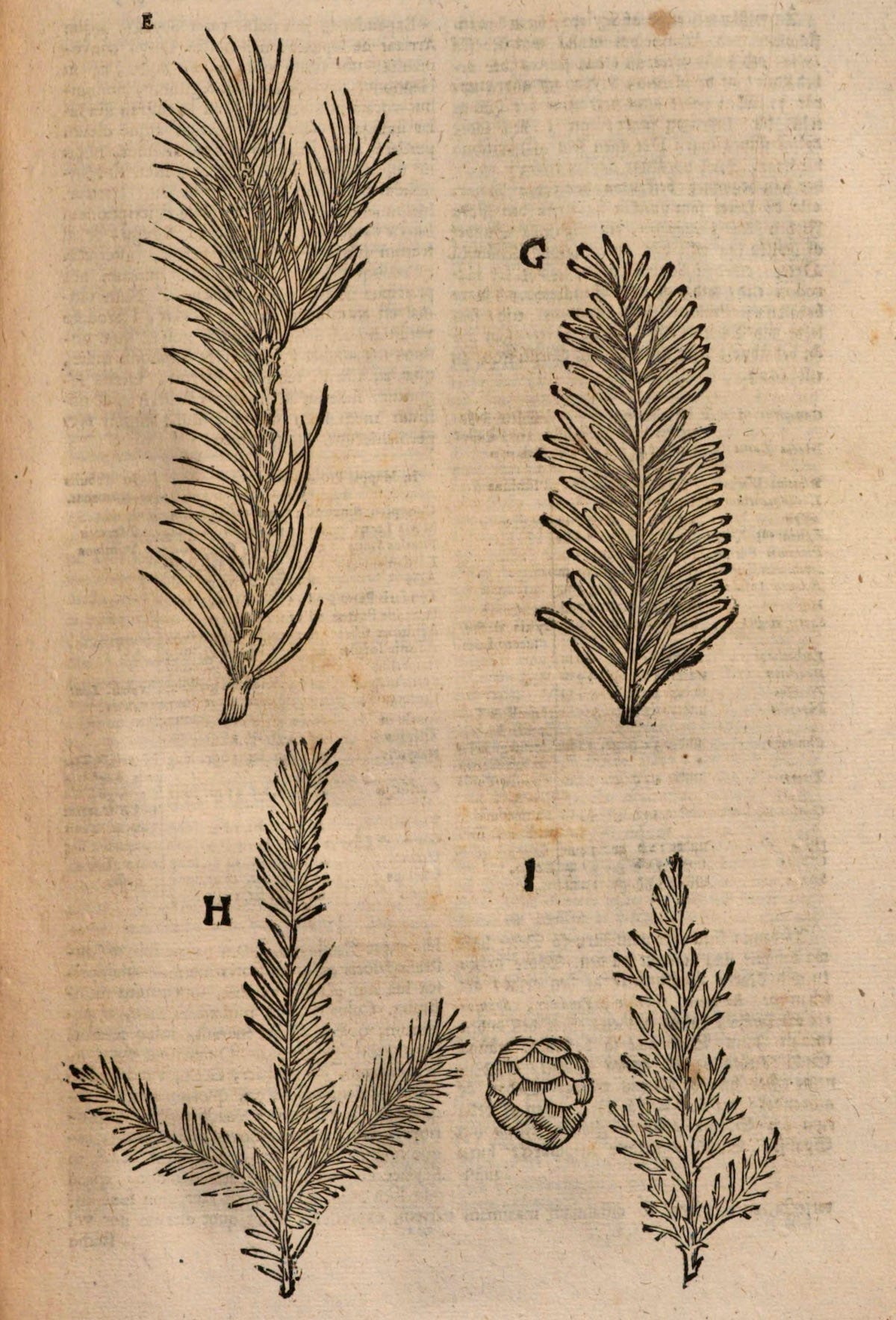
The needles of the alba picea found in Germany and Bohemia (G in the illustration above), Rudbeck argued, are twice as broad and long. Conifers printed on further pages made a similar point. For example, the needles of pinus ossiculis duris, foliis longis that grows in Italy, and Spain, Africa reach between 8 and 10 fingers. By contrast, the ones of the pinus sylvestris montana altera, occurring on the snowy mountains of Austria, are shorter, but still double as broad.
Tree after tree, Rudbeck sifted through conifers as depicted and described by the botanists of his time. All their needles were simply too long to qualify for Pliny’s pine, he reasoned. That was except for one.
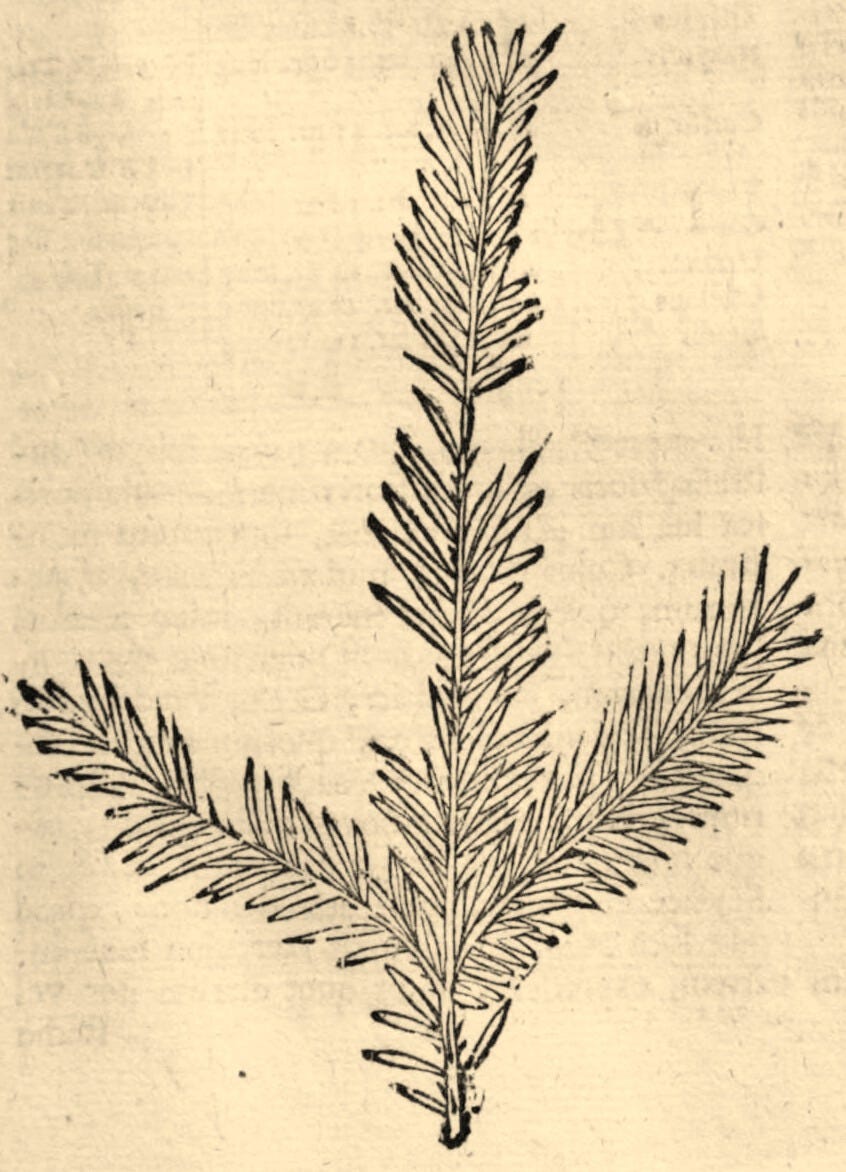
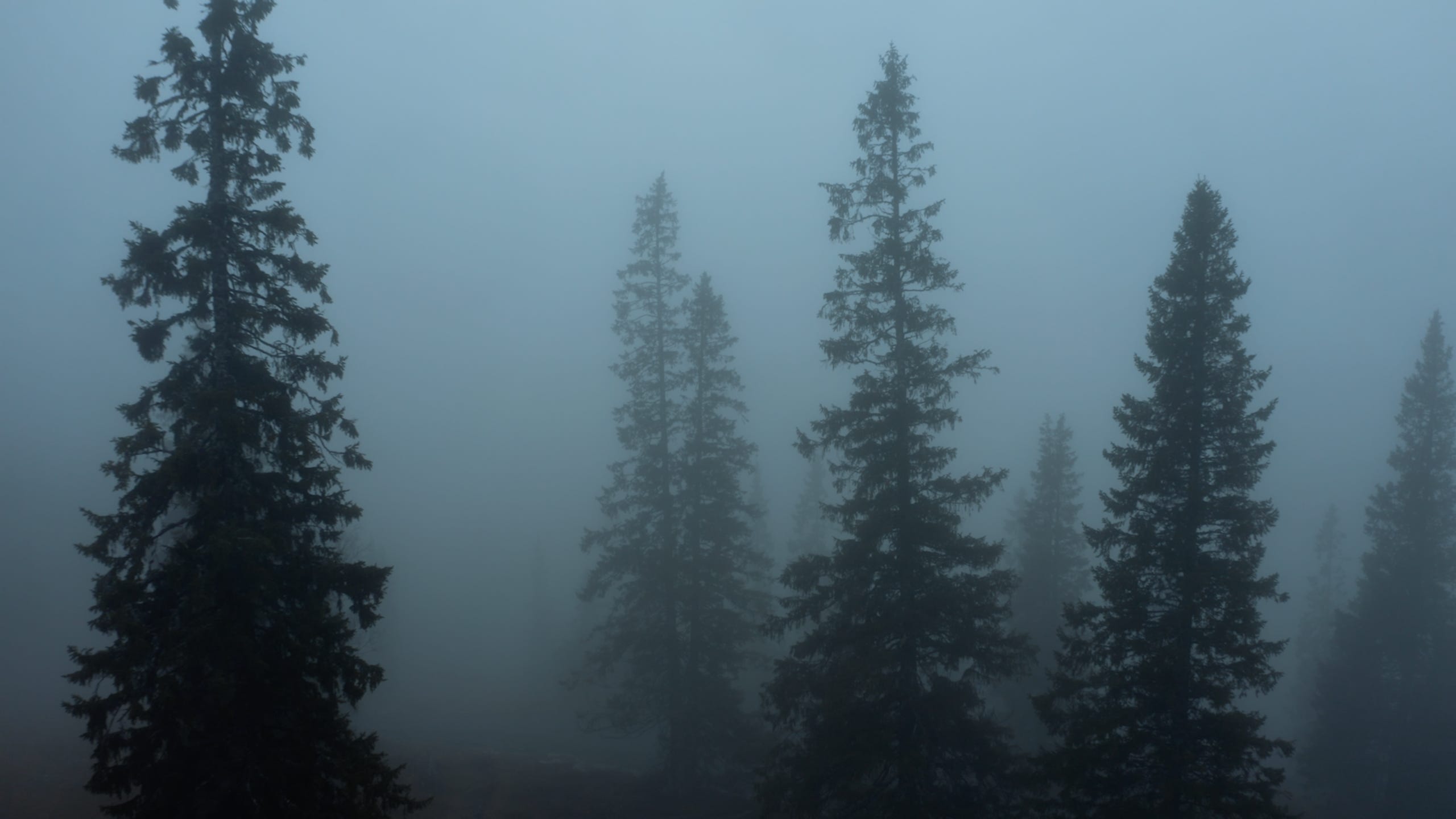
It had to be this tree, Rudbeck argued, that Pliny had meant: The needles of “our spruce” (abies nostra), he pointed out, are of a size that can reasonably be compared to those of the cypress. As with that tree, its branches start shortly above the ground. Both trees grow in a narrow, cone-shaped form.
In fact, Rudbeck explained, this spruce did not fall short of its Mediterranean relative in elegance. For this reason, he proudly pointed out, he pioneered promoting its use for ornamental planting in the Botanical Garden he founded at Uppsala.
What is more, the species flourishes across the entire Swedish-Norwegian mountain ridge that he claimed as the Atlas Mountains. Well beyond 64° latitude, Rudbeck explained, the spruce forms “dense and lofty forests” of the kind that Pliny mentioned – capable of carrying the load of snow that the harsh winters deposit every year onto these mountains.
To any person familiar with the North, Rudbeck concluded, the answer to Pliny’s “trees of an unknown kind” was as simple as it was evident – it just had to be “our spruce”.
The Vision Collapses
In his Atlantica, Olof Rudbeck wove observations of the microcosm and the macrocosm together into an all-embracing story. Just as snowflakes, mountain peaks, or birds, he used plants as keys to unlock a ‘Nordic truth’ he saw still hidden beneath the classical texts.
In parallel with the Atlantica’s volumes, Rudbeck and his family had embarked on a botanical project of similar extent. In an atlas of plants, they aimed to depict every plant known to humankind.
Under the title Campus Elysii (‘The Elysian Fields’), its twelve volumes were bound to unfold the abundance of God’s creation. In its flora, Rudbeck the Elder and his son sought evidence of the primordial position of the North.
Yet their works that were to tell this story – the Atlantica and the Laponia Illustrata – remained fragments: In May 1702, all that had not left the printing press went up in flames in the Great Fire of Uppsala.

Fallen Needles
From thousands of woodblocks already carved for the Campus Elysii one shoebox remained. Yet the collapse was not just material – it was epistemic.
By the mid-eighteenth century, most of the blocks that survived the fire passed into the possession of Carl Linnaeus. After his death, Edward Smith acquired his collections in 1784. At this time, Linnaeus – still a student of Rudbeck the Younger – had long eclipsed his teachers as Sweden’s most famous botanist.
Smith made an effort to illuminate the obscurity into which earlier generations of Swedish botanists had already fallen. In 1789, he printed the remains of the Campus Elysii that he acquired eighty years after the inferno. They appeared under the title Reliquiae Rudbeckianae (‘Rudbeckian Remains’), next to contemporary botanical references.

To this work, Smith also added an appendix.
It showed four woodcuts of conifer twigs beneath a few lines of explanation.
“These four illustrations came into my possession together with those of Rudbeck. However, as they seem worn out from frequent printing, I suspect them to pertain to another work than Rudbeck’s.”
Smith, Reliquiae Rudbeckianae, p. 35.
Smith had suspected half the truth.
The four woodcuts did not feature in the volumes of the Campus Elysii printed before the fire. However, they did stem from a work by Rudbeck.
They were originally cut to illustrate the Atlantica.
In its third volume, Rudbeck used them to claim Pliny’s cedar-like trees for his homeland – and with them, the Atlas Mountains on which they allegedly grew.
The woodblocks from which they were drawn – today kept in London – are a tangible testimony from Rudbeck’s efforts to anchor ancient writings in Sweden’s nature.
A few generations later, the web of meaning his Atlantica spanned across the flora of the North had detached. The woodblocks had fallen out of context, speaking nothing beyond their material presence and botanical face value. At the end of the eighteenth century, they were seen as what they had become – a handful of conifer illustrations carved into pear wood.
The blocks still bore traces of the printing effort. Yet the scope and ambition of this effort had become invisible: a vision in which ancient myth and modern botany once converged in the North, now sunk to a footnote – needles beneath a tree past its prime.
Further reading and references
All photographs and translations are my own unless stated otherwise.
Minor parts of this article were published in an earlier version as an introductory text on our object database Reaching for Atlantis.
Please note the general bibliography available here.
This chapter follows Rudbeck, Atlantica, vol. III, pp. 571f.