

This article continues the journey on the Ljusnan River and through the myths projected onto its banks, as told in Part I.

At the Gates
The lay of the land had changed when we returned to Ljusnan after Midsummer. From the bridge over the river, we watched the rain of the past weeks pour into a riverbed that had been dry rock when we scouted it the month before.
The gates of Laforsen Dam had opened. Feeling its rumble, I watched the wind drive mist across the white water.
Class III rapids, Lars said.
We carried the boats to a protected pool beneath Laforsen Fall.
With a beating heart, I slid into my boat, wobbling until my thighs locked against the braces. It had been some years since I crossed the wake of container ships on the Outer Elbe.
“This is a chance to paddle the full upper section”, Lars had said. “It’s really rare.” Our original plan – to start further downstream – had shifted.
Shouting against the water’s roar, we set our line and pushed out into the river. The current took hold, and as the white crests closed in, I realised: the moment to turn back had passed.
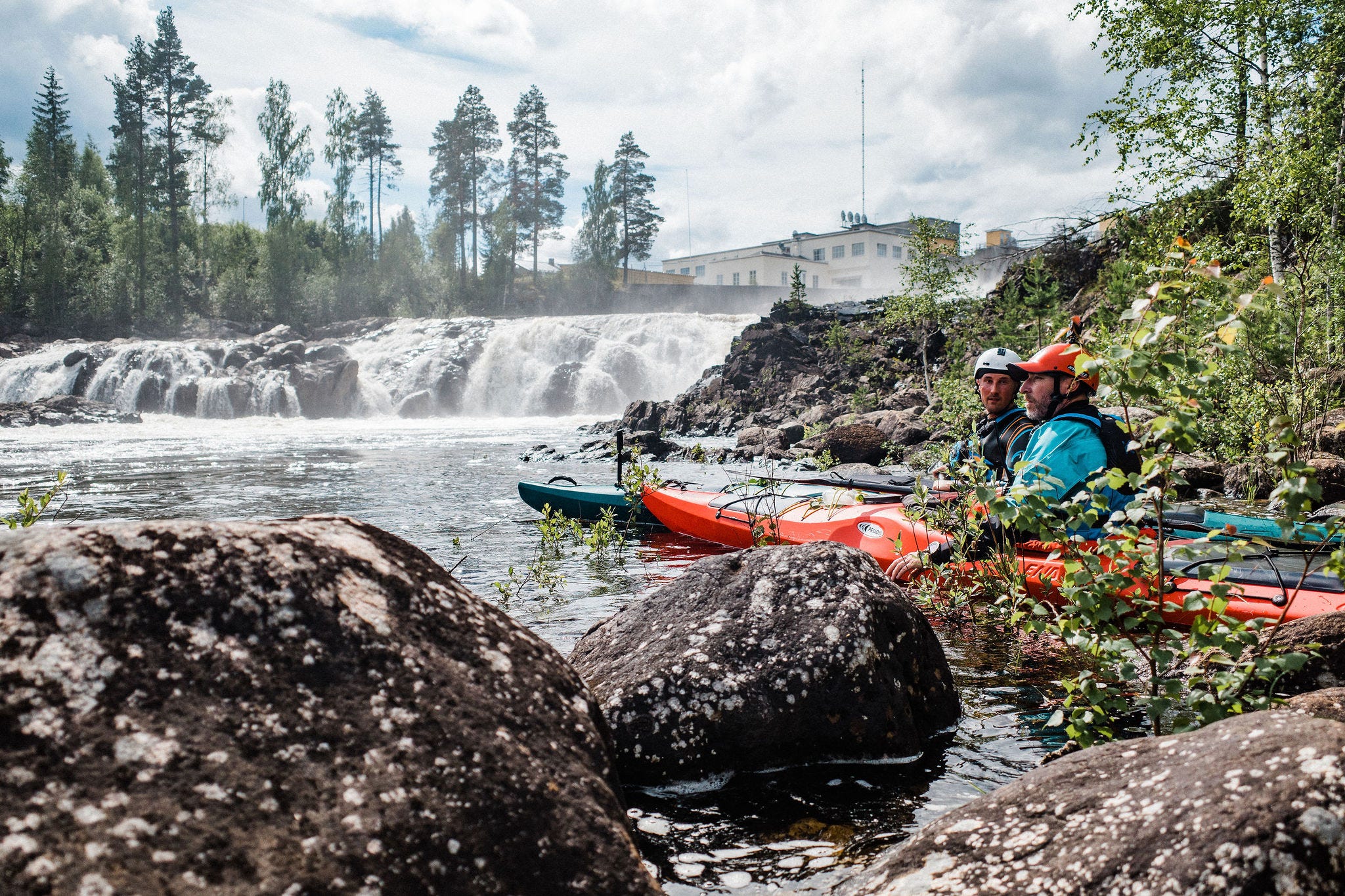
Paddling steady, I approached the first threshold.
The bow pierced into the water, and the river struck the hull from the side. The boat bobbed up again, my paddle caught air. I felt the surge push against the stern.
I missed a stroke.
Cold closed around my head. My vision turned yellow-brown, all sound collapsing into a rushing pressure.
Bubbles traced the hull ahead of me, rocks passed close to my helmet. I folded forward, felt the latch of the spray skirt, pulled, and slipped free.
When I surfaced, the water had eased.
Feet first I was floating, carried downstream by the river. Trees on the river bank drew past. Further on, I spotted Lars securing my boat and the paddle.
In quick bursts I swam for the shore.
Only on its rocks did my breath begin to return.
Pockets of Elysium
It took some time before the tension eased again. We regrouped on the banks. Eventually, we decided to continue.
Beyond the first rapids, Ljusnan took over more gently.
Effortlessly, almost without sound, the water carried us forward. In canyons Ljusnan cut into the land over millennia, the kayaks glided downstream. Spruce lined the banks, as if shielding this band of water from all that lay beyond.
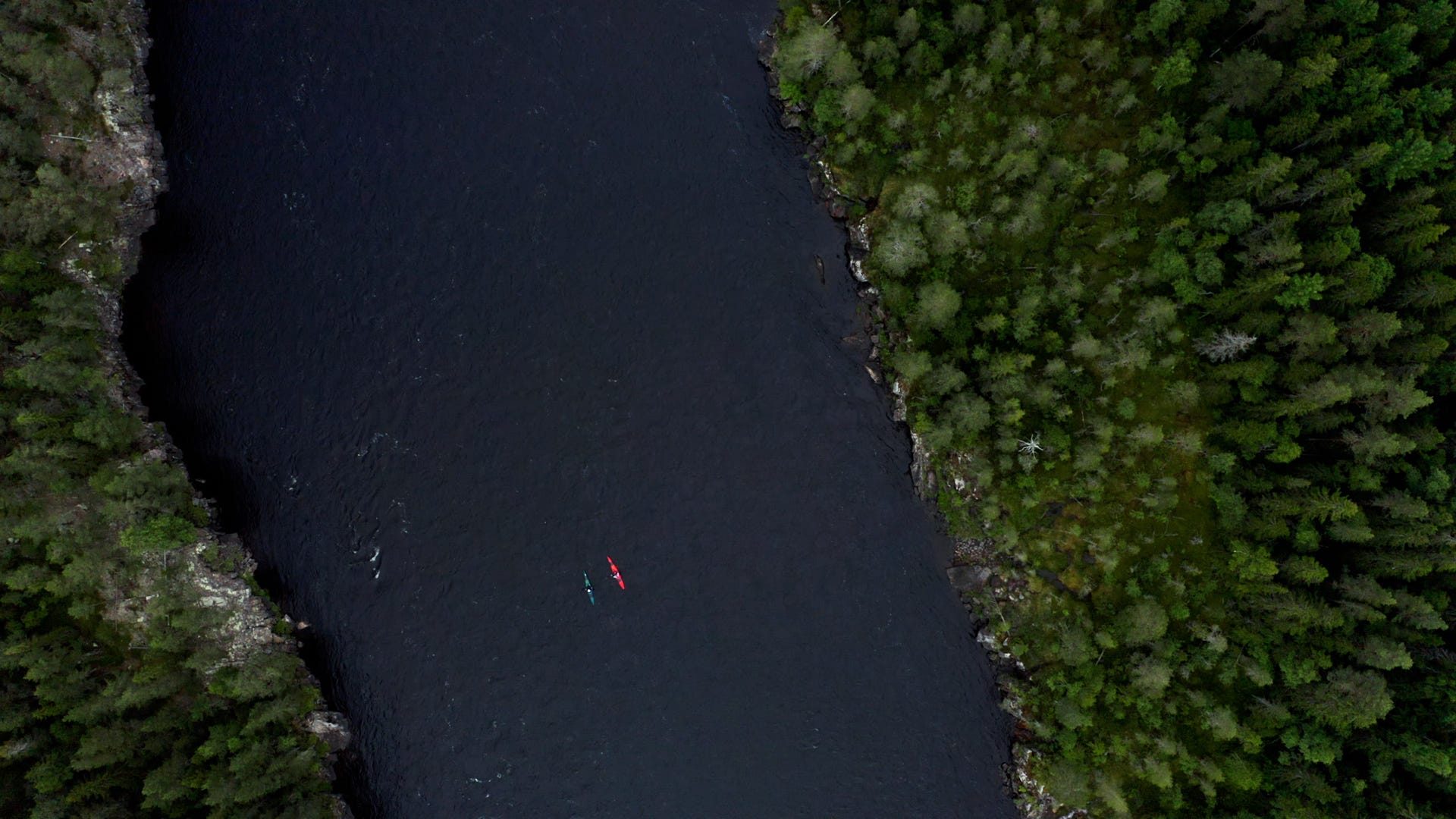
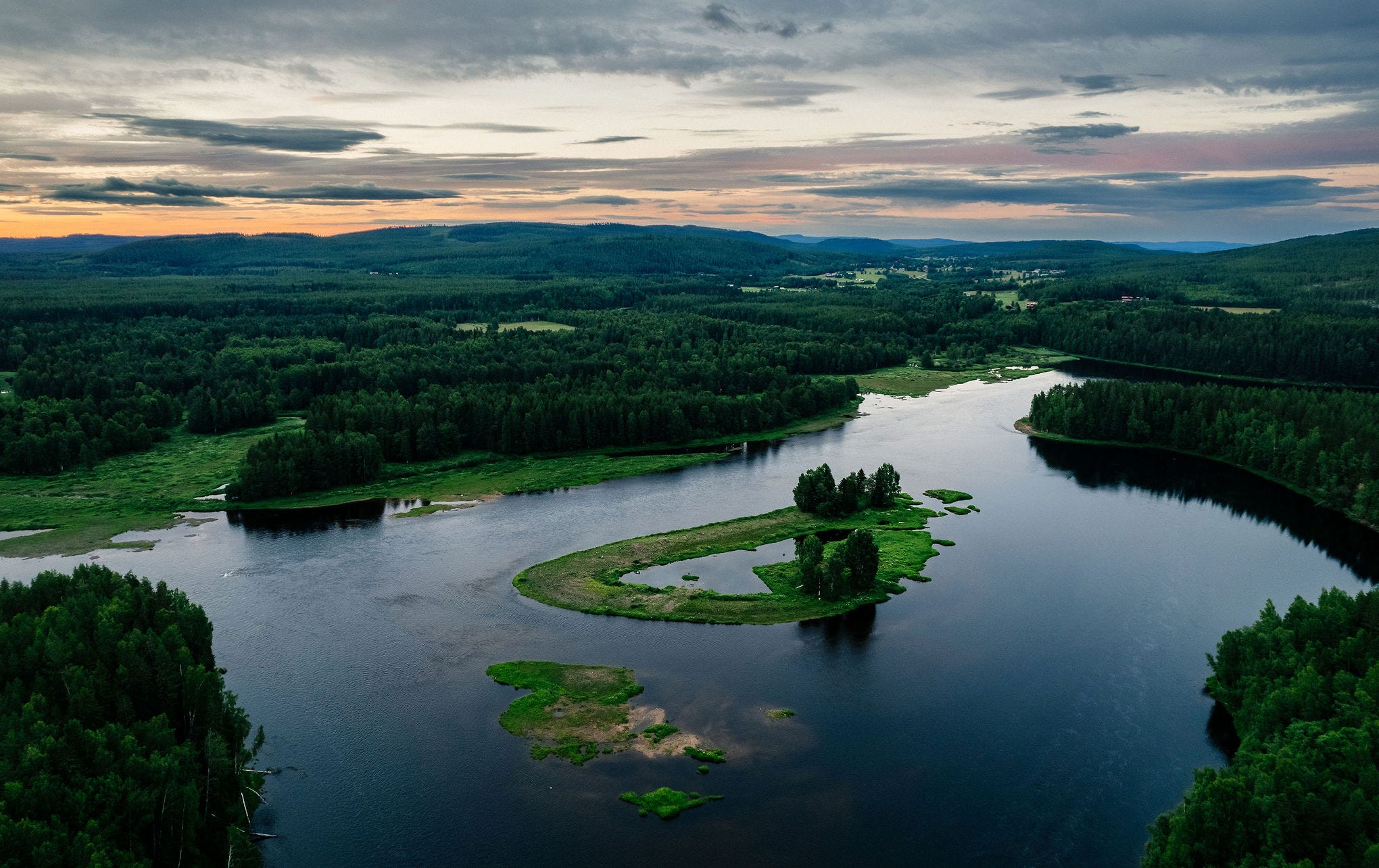
It was in the light of one of the longest days of the year that we reached Knutnäsudden, a small island dividing the river.
Near its shores we had planned to meet Thomas von Wachenfeldt. Thomas is a composer as well as a historian of music.
In the dusk of the midsummer light, we listened to him play of his violin. At the campfire, we heard stories about the music that had grown in resonance with the river. Of the composers who met to celebrate Laforsen, where people gathered once a year in music and dance.
Photographs and descriptions remain of the yearly celebrations at Laforsen Fall.
The waterfall had drawn people into shared movement and ritual. Black and white photographs gave an impression of the emotions this site seems to have stirred in human beings; an impression that reminded me of the work of Jane Goodall. Studying chimpanzees, she observed places of this kind eliciting responses in the animals such as swaying or rhythmic motions:
I can’t help feeling that this waterfall display, or dance, is perhaps triggered by feelings of awe, wonder, that we feel. … So why wouldn’t they also have feelings of some kind of spirituality, which is really being amazed at things outside yourself? 1
Something about the ways of being with the landscapes along Ljusnan – in resonance, in creating from it – felt as if it made aspects of Elysium tangible: They struck a chord with the ways in which the Roman poet Vergil had envisioned the dwelling place of the souls. On its banks, the souls engaged in song and dance, and Orpheus himself – the foremost musician of all – accompanied them on his lyre.
There were sportive competitions in Elysium, too. Echoes of this returned later that evening. At the campfire, Lars spoke about his relationship with the river. On Ljusnan he grew up. Along its waters he learned to paddle as kid, and won his first championships as kayaker. From here, he embarked on a trajectory as explorer of white water and mountains.
It was to this place, Lars confided, that he wanted his life’s path to circle back for his final journey – with his ashes being spread at Laforsen Fall.
Darkness and Light
Yet along the ‘River of Light’ there are shadows, too.
The Elysian Fields border on more somber realms, as Vergil already describes in the myth. The road that takes Aeneas towards Elysium passes through the shadow of Tartaros, cast by the girding walls too massive to be destroyed.
Behind an imposing gate, with columns forged of steel, the hero knows the realm of dark, hearing the metal chains and the cries of the souls condemned to eternal punishments.
With creative bravado, Rudbeck reconciled the glaring contrasts of Elysium and Tartaros. Up north, he explained, the endless days of summer yield to weeks of darkness in wintertime, a time when all life seems to recede. For him, only the extremes of Nordic seasons could explain how the same place could inspire two opposing spiritual landscapes – contrasts that, to a Roman, must have seemed irreconcilable.
Rudbeck built his work on the one thing he considered stable and unchanging – the rivers, mountains, seasons of the North. He did not live to see how they gradually entered into the domain of human manipulation.
It was a different catastrophe that pulled the ground out from under his Elysian projects. In 1702, the Great Fire of Uppsala destroyed his life’s work, the grand visions he planned to lay out in the coming volumes of the Atlantica and the Campus Elysii.

What remains are fragments – traces of a cosmos Rudbeck once mapped in connected meaning, albeit incompletely. The world he described has increasingly become unreadable through his texts. As such, they have sunk beneath a story of human interruption that superseded it along the rivers of the North. 2
These interruptions took material form along the river.
I had seen places like that before along Ljusnan, long before the idea was born to paddle its middle section: lifeless shores on which I had wandered upstream, near the mountains, and the ruins of villages along their course. Along Lake Lossen, I had passed abandoned homes that late spring reveals at the reservoir lake, during the few weeks before the meltwater fills the lake each year and drowns these walls anew.

Electricity had not been the only good extracted from the river landscapes of the North. As we glided down Ljusnan, the cover of spruces lifted, and sawmills pressed into the view. From fortified banks, quays reached into the water, masoned arms that once regulated streams of timber that floated down the river.
A century of log driving ended when the hydropower projects were carried out along Ljusnan. In 1953, the waterfall at Laforsen was sacrificed, once the largest in the southern part of Norrland. A place that had inspired artists and musicians, and where people gathered in early summer to celebrate and dance, yielded to a concrete dam.
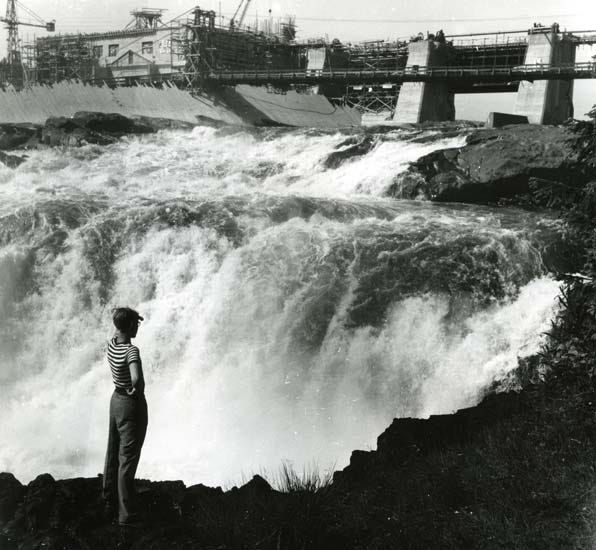
Most of the eighteen power stations that exploit Ljusnan were built within two decades after Laforsen. The rapids remaining downstream also shifted into the crosshair.
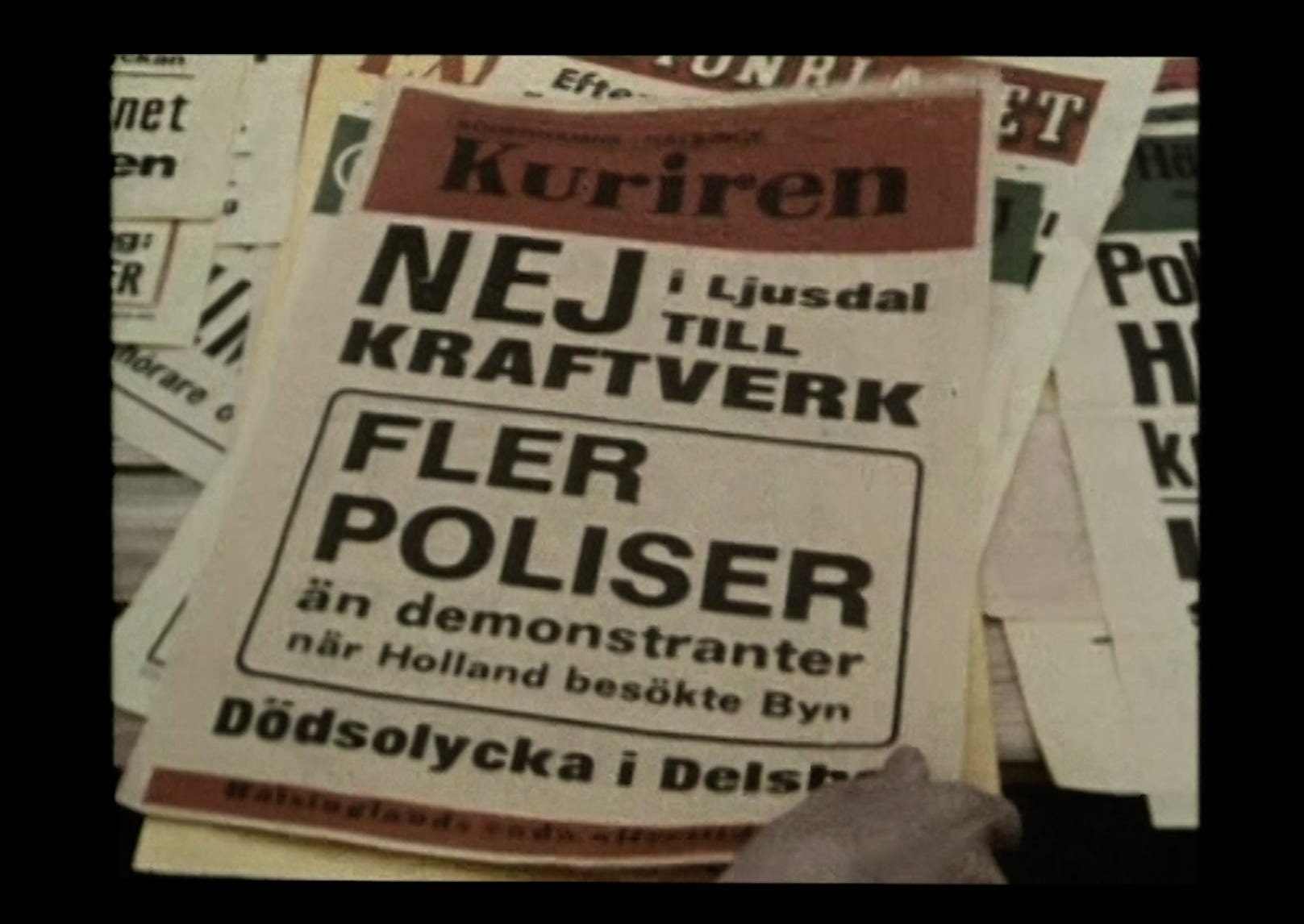
However, the narrative of progress motivating their construction increasingly met with resistance in the Sweden of the 1970s.
Across the North, Sámi communities and environmentalists joined forces to avert the damming of free-flowing rivers. On Ljusnan, citizen protests eventually saved a final section where Ljusnan still flows freely – fifty out of 436 kilometres where the rapids are not sacrificed. 3 In the rest of Sweden, only four major rivers have remained where the further development of hydropower today is legally banned.
Diminishing Wonder
Hydropower projects left the river landscapes of Sweden irreversibly altered. Living rivers were divided into regulated segments, their flow recalibrated to lucratively meet fluctuating demands on the electricity market.
Life on and in the water changed accordingly. The shifting flow regimes meant that banks along barrier lakes fell sterile. Building projects fragmented reindeer grazing areas and severed migratory routes across the North.
Beneath the impounded waters lie former homes, archaeological sites, and places central to Sámi life and memory – removed or surveyed, then submerged. The concrete dams blocked the path of salmonid fish. With them disappeared dependent species such as the freshwater pearl mussel.
With the dams, phenomena that had shaped the human experience of the seasons along the river vanished.
Slush retained behind the turbines replaced the blanket of ice that inspired awe each spring, when cracking sounds filled the morning hours as the floes broke loose and began their annual journey towards the sea. Waterfalls that had drawn people together and inspired music and dance fell silent.
The altered lands along the river afford different experiences to those who pass through them today. Such movement unfolds across layers of time. What a place once was and what it once meant to people – riverbanks of mythical resonance, a waterfall that sparked shared experiences of community and awe – takes on a vertical dimension. From beneath, this history presses against our present.
What becomes apparent to a sentient observer is not the fading of awe itself along the river. It is a fundamental change in the conditions that once allowed it to take hold: The very ground that has sustained this feeling has shifted. 4
What arises today along the river is accompanied by a sense of disorientation. Becoming aware of what a place once inspired alters how we move through landscapes. At the same time, encountering their present realities, the expectation fades that the same places may still open into similar states.
What remains, after all, is movement – not as a passage towards a transcendental, ‘Elysian’ goal, but as its continuation under worldly conditions: without certainty that what was once promised can still be reached; if and where glimpses of it may still arise along the way.
Pilgrimage of Awe
When we set out to film on Ljusnan, I did not embark for encountering Elysium in the sense Olof Rudbeck had imagined. What drew me instead was a direct form of engagement with these landscapes that was both physical and spiritual – a way of moving through these landscapes with open mind, attuned to resonances they once held, still hold, or have lost.
Filming translated this sensibility into movement. What had once been articulated in myths of promised places – and what Rudbeck later had anchored in geography and names – we did not pursue as a destination. Directing the film, I approached it as a sustained effort to move receptively through a world in which the conditions for such encounters had shifted tremendously.
In the form of the Golden Bough, the Aeneid introduced a device associated with the possibility of embarking on such a journey – an offering brought in the hope of transitioning between life and afterlife, between the mortal and the divine, between the known world and the concealed.
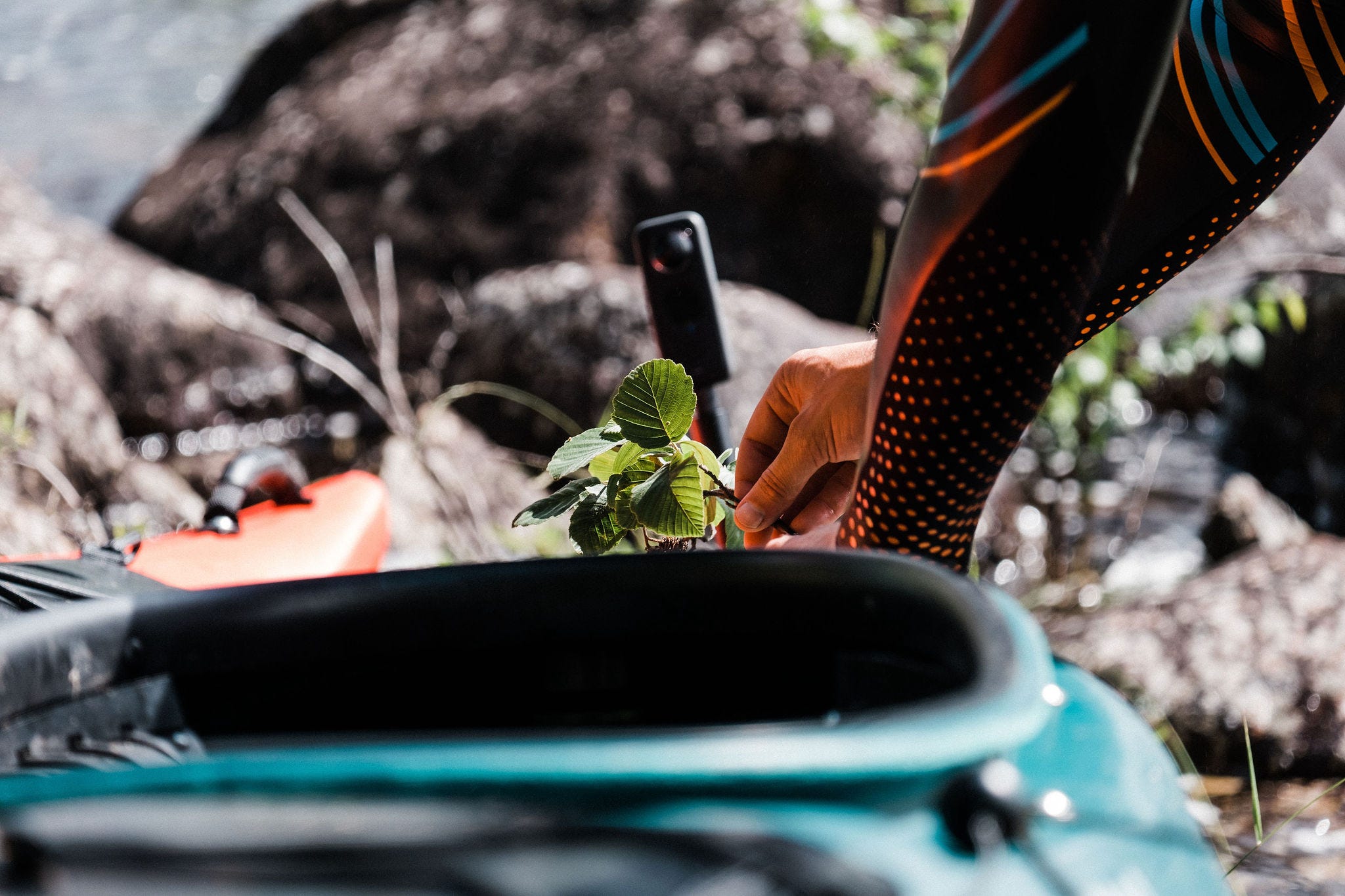
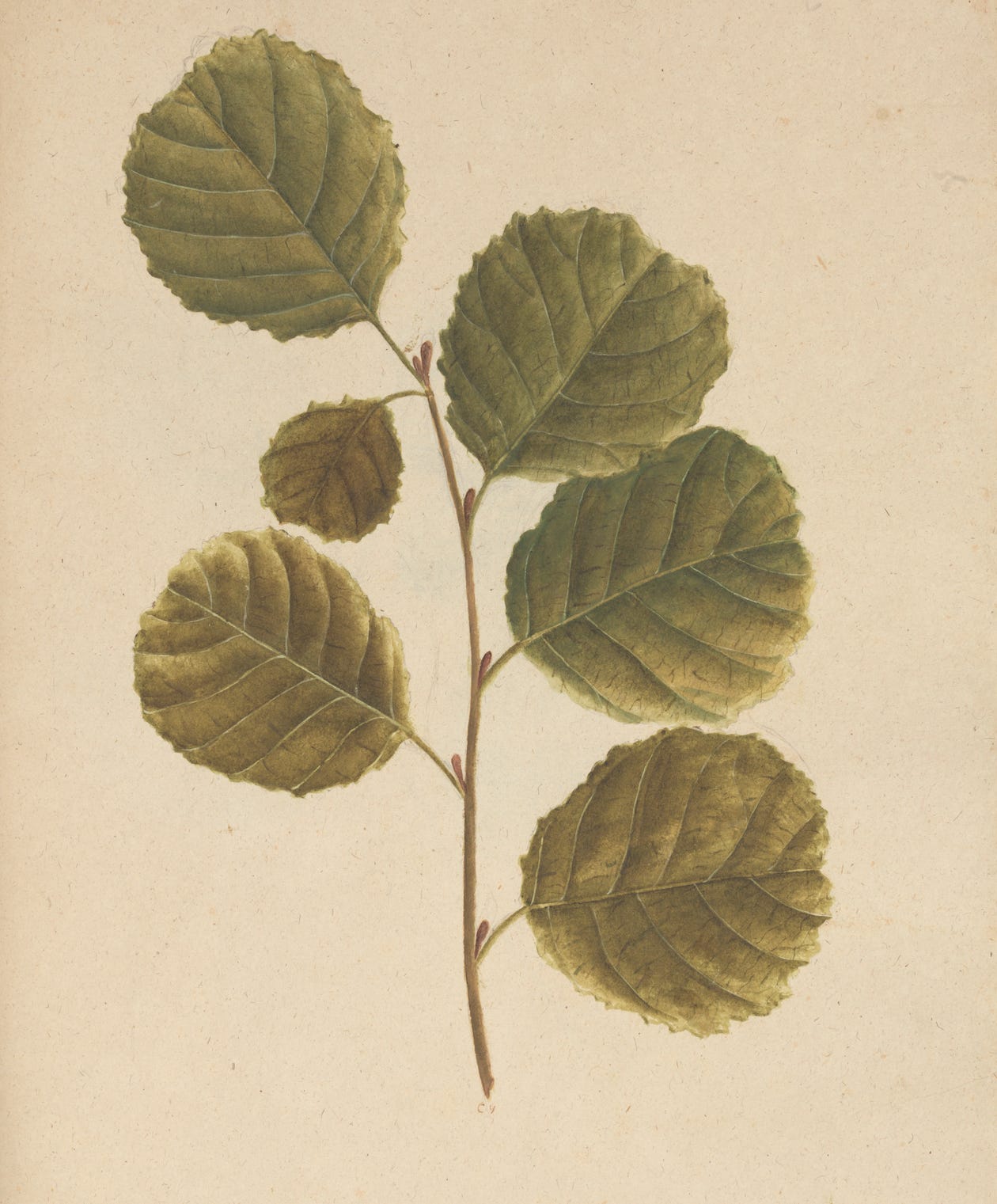
Creating Frozen Atlantis, I seized on the same device – in Olof Rudbeck’s reading as the alder twig – not as a symbol that secures passage towards a fixed destination. Rather, we fixed it to the bows of the kayaks and carried it down the river as a gesture, inviting ways of seeing in which the world, as encountered in the present, might still appear as porous.
Glimpses
When we edited Frozen Atlantis, we constructed a journey in which the boundaries between our modern world and myth shift fluidly.
The opening of the chapter The River of Light outlines Vergil’s myth with the help of woodcuts from its first illustrated print. Presenting the initial quest for the bough, it merges with visuals near the area from where we eventually embarked on Ljusnan.
For the approach to the ‘Sibyl’s Cave’, we had scouted the Dead Fall near Laforsen. Before the waterfall was dammed in the 1950s, its waters split around a nearby river island. When the dam was finished, the northern branch was cut off, leaving behind a detached canyon.
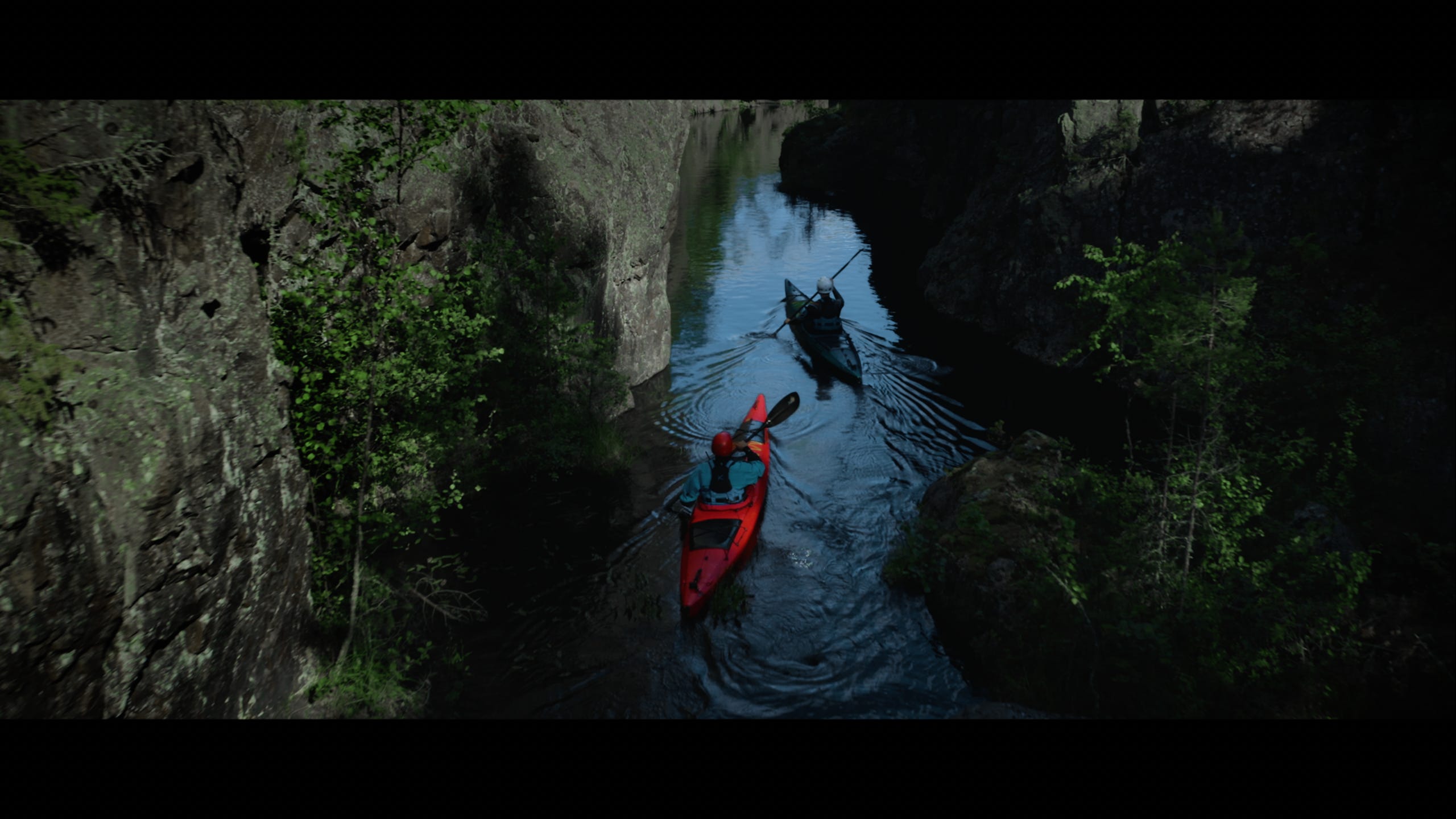
The dark, stagnant waters that filled the canyon resonated with Vergil’s description of Lake Avernus – the home of the Sibyl whom Aeneas must consult to reach Elysium. Lars later noted that our descent by kayak was likely the first undertaken in the canyon.
Along the steep walls of the Dead Fall lies the Rövergrottan (‘Robbers’ Cave’), a site associated with tales of brigands who hid on the river island. As we enter, fragments of Latin echo in the cave, snippets of the words the Sibyl speaks in Vergil’s epic.
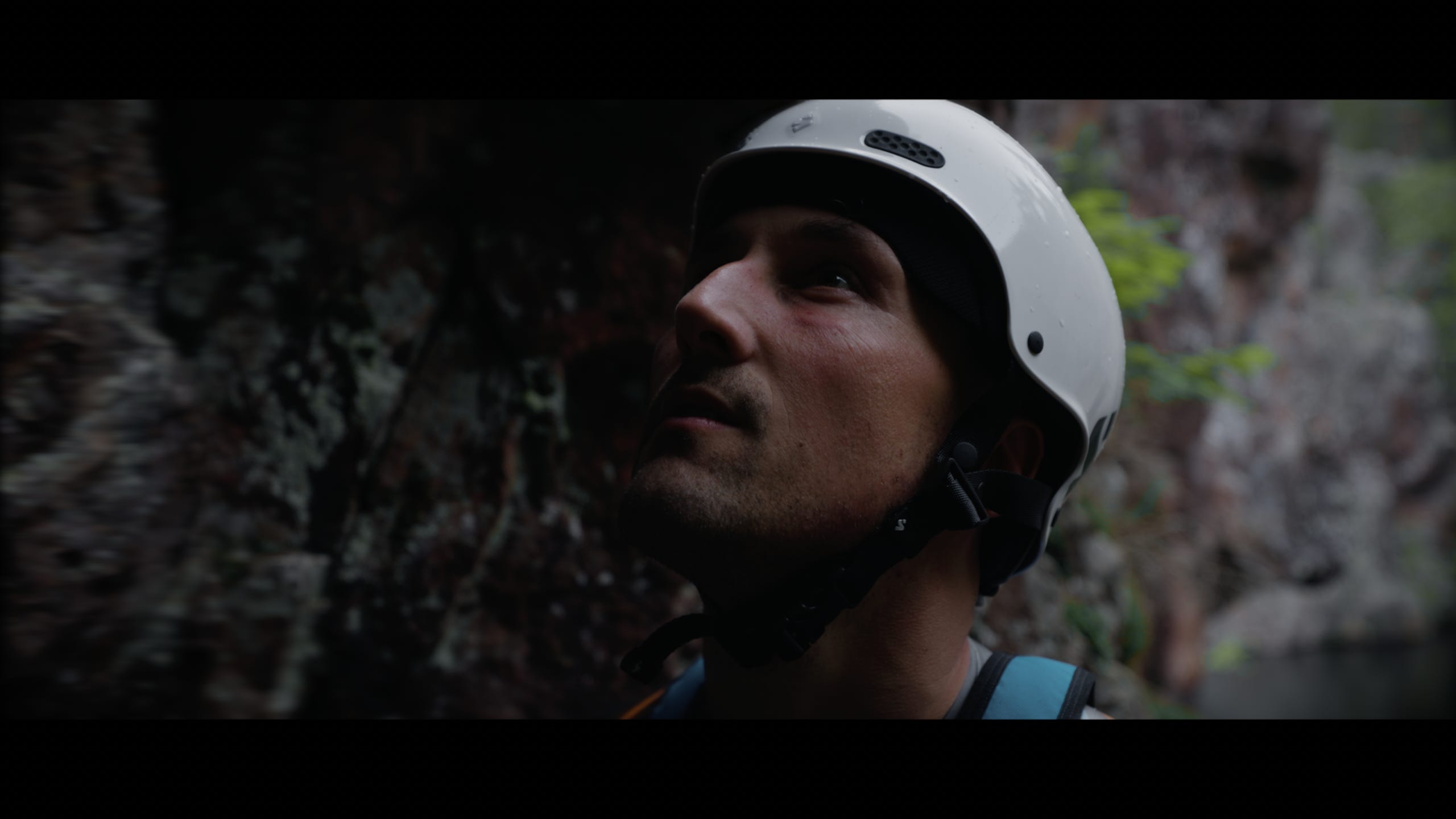
In the myth, the Sibyl instructs Aeneas how to find and pluck the Golden Bough. In Frozen Atlantis, a stream of images echoes her paraphrase of the quest – visuals filmed all along the course of Ljusnan. Some of these correspondences between the Swedish landscape and Vergil’s myth are immediate and envisioned after the scouting trip.
Others emerged contingently, during filming.
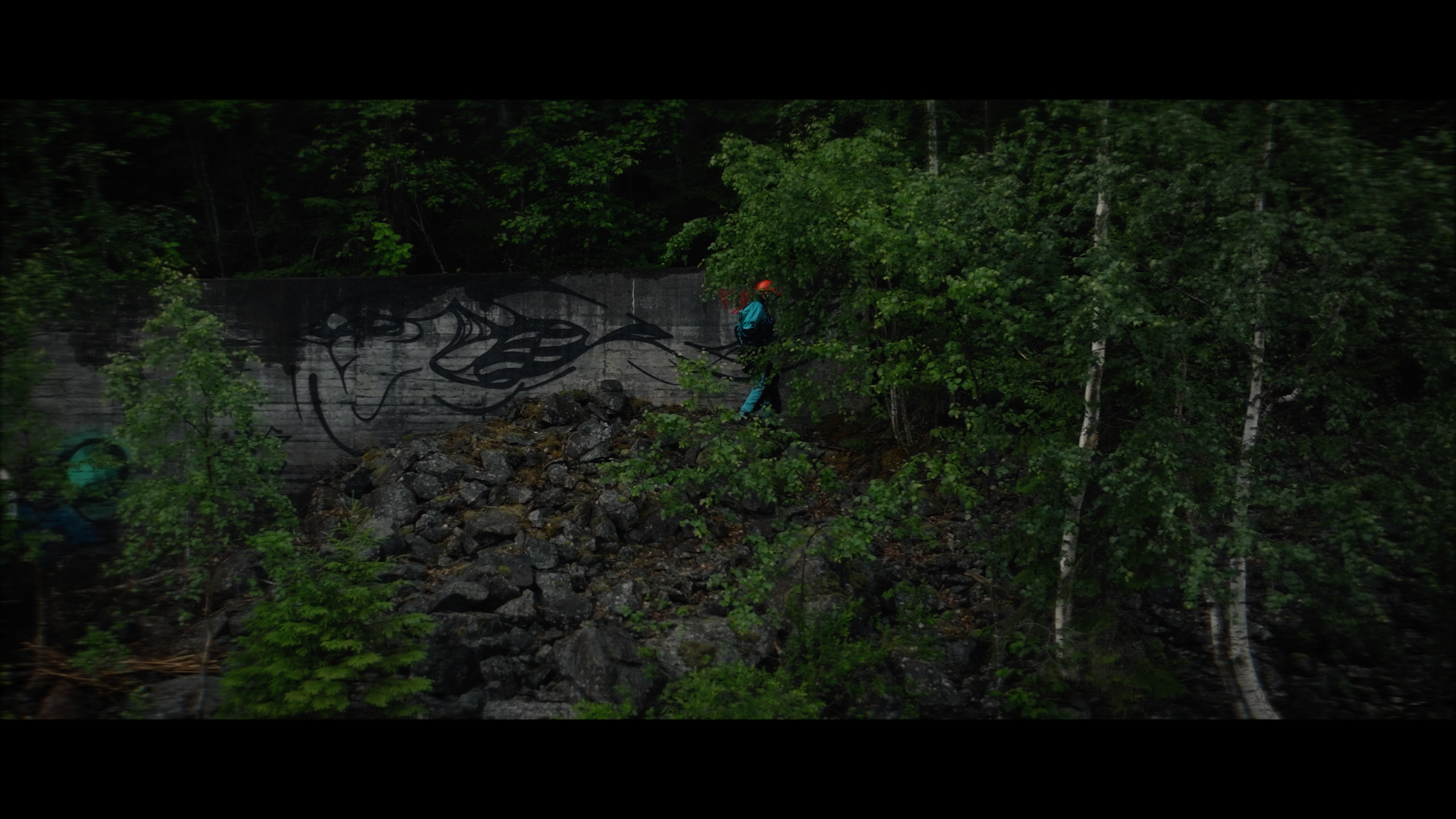
Among the most serendipitous moments was the graffito of a bird, sprayed onto a concrete wall near the outlet of the Laforsen power station. In the film, a drone swipe reveals it on the bank as the seeress’s voice recounts Aeneas’s quest in the endless forest. As he despairs, Venus sends out birds to guide her son to the shimmering branch.
In a brief moment, ancient myth here touched the present landscape; a glimpse registering on the river’s concrete lining.
Moments like these remain among the most informing of the journey that led towards Frozen Atlantis: unexpected instances in which the present landscape stirred resonance with layers of myth that had first set the movement on the river in motion.
Exit Through the Ivory Gate
In the Aeneid, the journey to Elysium comes to a natural end.
Aeneas must not stay in Elysium. Having reached the dwelling place of the blessed and encountered his father, he must return to the surface.
His path back to the world of the living leads the hero to the Gates of Sleep – one of horn, through which true visions rise, and one of ivory, through which the spirits send false dreams.
In the myth, Vergil has Aeneas depart through the ivory gate. For two millennia, the reason for his choice of path has remained an unsolved riddle. 5
In Frozen Atlantis, the river chapter ends at Edänge, the southernmost of the rapids on Ljusnan left undammed. Two abandoned railway bridges here arch above the river, across a whitewater threshold.
Beyond, Ljusnan transitions into a more regulated section.
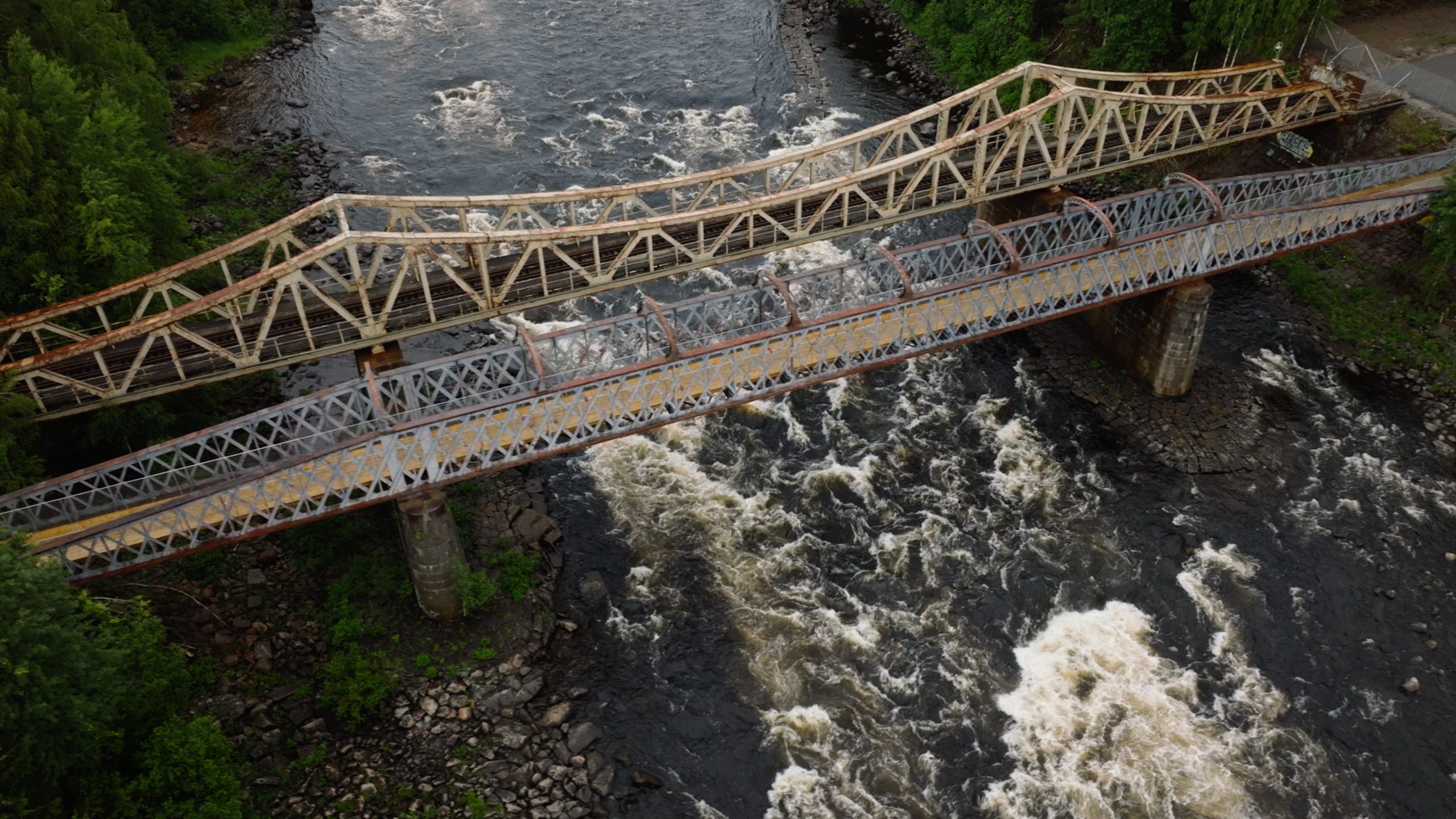
Paddling the stretch from Laforsen to Edänge, we encountered different sides of a modern river – stretches where Ljusnan appeared less altered, less constrained, still resonating with a capacity for meaning and connection.
I left Ljusnan with a deepened gaze on Sweden’s North, attuned to pockets of resonance that, serendipitously or by design, may widen between landscapes of extraction and the forms of meaning that may still shimmer at their depth – a gaze that also integrates the interventions that have diminished the river landscapes’ capacity for awe.
Such experiences on the river led me further on the creative journey towards Frozen Atlantis – to explore how this double vision could be held in film, oscillating between the world as it appears, and as it once may have been readable to human beings.
Have the mythical destinations the Atlantica put on the map of Sweden ever lain in reach, at all?
Vergil described the journey towards Elysium as proceeding on a middle ground between consciousness and dream, between vision and reality. In the form of the two gates, he hinted at a form of poetic truth that ultimately keeps this tension suspended.
Regardless of the ‘exit gate’ taken from a state we may call Elysium – whether memory of it is affirmed as verisimilar experience in landscapes that may still exist, or of it is ultimately exposed as delusive vision – what remains, and what continues to connect us as humans, is the imprint of such a state that we once left and to which we long to return, and the movement itself resulting from this longing:
The continuation of seeking, even under conditions that no longer guarantee arrival.
Further Reading and References
All photographs and translations are my own unless stated otherwise.
Acknowledgments
I am grateful to all who supported the voyage on Ljusnan – Darren Hamlin, Lars Larsson and the Larsson family at Kallmyr, Marin Olson, Theo Rosén, James Venison.
Please note the general bibliography available here.
As quoted in Dacher Keltner, Awe. The new science of everyday wonder and how it can transform your life, New York 2023, p. 42.
Keltner points to Goodall’s video “Waterfall displays”, available on YouTube.
Cf. Hans Blumenberg, Die Lesbarkeit der Welt, Frankfurt am Main 1986.
On this see Erik Fichtelius, Kampen om Ljusnan. Dokument och argument från en bygd som kämpar för sin miljö, Stockholm 1972.
See Keltner, Awe, p. 174.
On the Gates of Sleep and their interpretation see (with further references) Grant Parker, “Spiritualism as Textual Practice”, in: Walking through Elysium. Vergil’s underworld and the poetics of tradition, ed. by Bill Gladhill and Micah Young Myers, Toronto 2020, 241–60.